As a health science major at Grace, you’ll be equipped with the mathematical and scientific skills necessary to prepare for graduate medical training in a variety of fields. A pre veterinary medicine concentration will prepare you for graduate veterinary training.
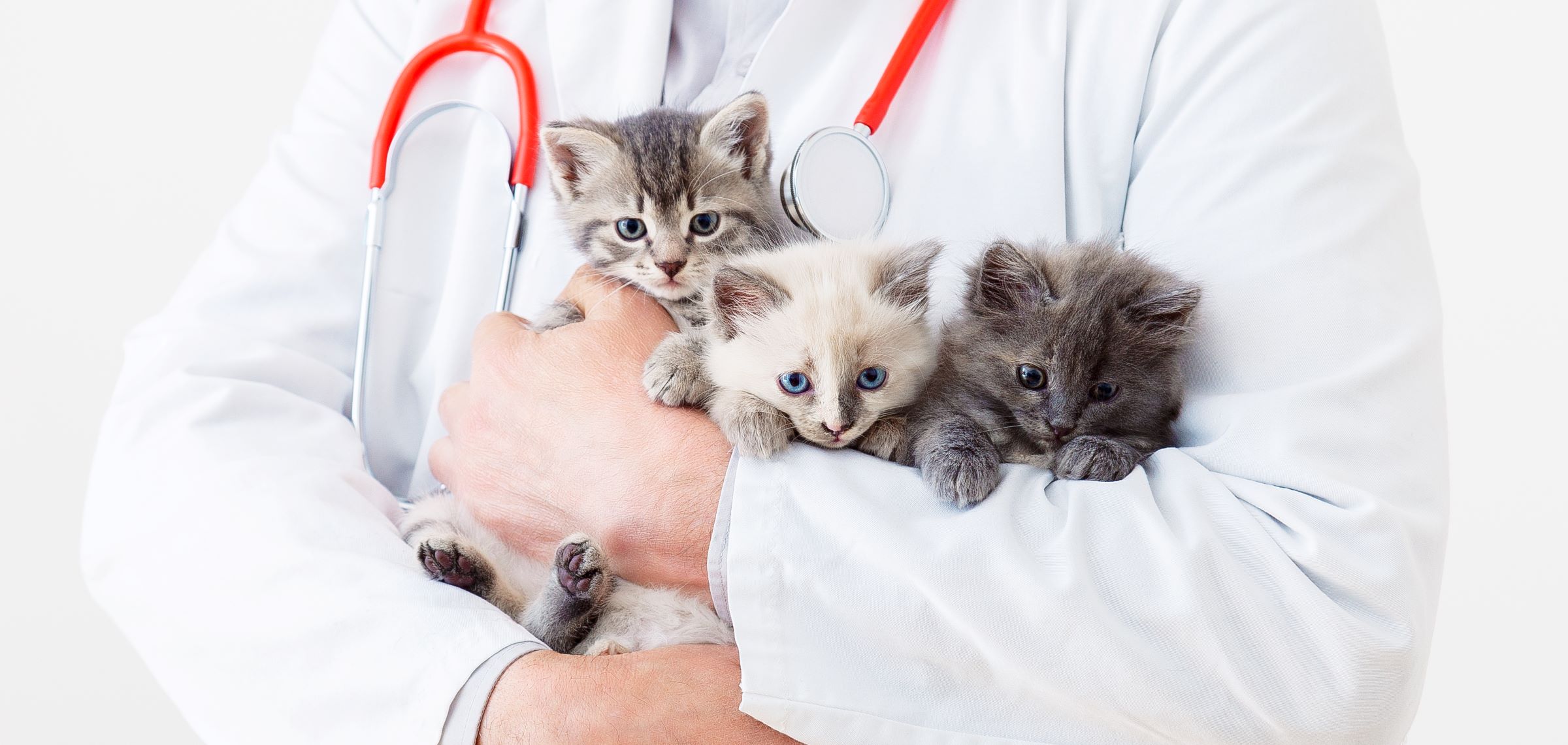
Providing care for animals of all sizes, veterinarians are the most broadly trained of any medical profession. Their scope of care ranges from routine exams to weekly surgeries.
Grace’s health science program is founded on the truth that the human body is an incredible creation of God. We acknowledge His role in not only its creation but in His providing for our health, whether that’s through the body’s ability to heal itself or the knowledge He gives us to promote healing through medicine.
Principles of structure, function, and cellular organisms. Includes an introduction to the scientific method, characteristics of cytoplasm and basic cytology, energy acquisition and release and heredity. Also includes basic plant structure and function. Students must enroll concurrently in BIO 1620. Four hours.
A continuation of BIO 1610. Includes structure, function and interrelationships of the organ systems of animals with particular attention to the human body. Also includes introductory taxonomy, surveying the major groups of plants and animals. Prerequisite: BIO 1610/1620 or permission of the instructor. Students must enroll concurrently in BIO 1720. Four hours.
An overview of the health professions, as presented by current practicing medical professionals. Includes occupations ranging from nurse to medical doctor to veterinarian to chiropractor, with many others included. Prerequisites: BIO 1610/1620 and BIO 1710/1720, or consent of the instructor. One hour.
A study of the interaction of organisms with their physical environment and with each other. Particular focus will be on application of ecological concepts and field work in various local ecosystems. Students must enroll concurrently in ENV 2120. Four hours.
This laboratory is designed to support ENV 2110 and must be taken concurrently with the course. This course has a fee for consumables used in its labs.
A study of the basic principles that guide cellular composition, organization and function. Particular attention will be paid to understanding the molecular mechanism that underlies cell function. Topics studied in the course include, processes of energy extraction, membrane transport, cell surface communication, cell cycle and regulation, cell division, along with the study of specialized cells like gametes, lymphocytes, neurons, muscle cells, and cancer cells. The course includes hands-on laboratory experiments involving current procedures in cell and molecular biology. This course has a fee for consumables used in its labs. Prerequisite: BIO 2310 or consent of the instructor. Three hours
This course is designed for students preparing for graduate studies in biology/medically related programs (medicine, physical therapy, pharmacy, etc.). The class includes an in-depth look at organization of the human body, cytology, histology, and the study of several of the major organ systems – integumentary, skeletal, muscular, nervous, and endocrine. A detailed study of the remaining body systems is covered in course BIO 3310/3320. Students must enroll concurrently in BIO 3220. Prerequisites: BIO 1710/1720 or consent of the instructor. Four hours.
This course is designed for students preparing for graduate studies in biology/medically related programs (medicine, physical therapy, pharmacy, etc.). This course includes an in depth study of the gross and microscopic structure of several major organ systems – endocrine, circulatory, respiratory, digestive, urinary, and reproductive. A detailed study of the other body systems is covered in course BIO 3210/3220. Students must enroll concurrently in BIO 3320. Prerequisites: BIO 1710/1720 or consent of the instructor. Four hours.
An introductory study of microorganisms dealing with the morphology, physiology and cultivation and identification of microbes and their role in the environment. Other areas studied include: immunology, genetics, metabolism, food, preservation, and diseases. Prerequisite: BIO 1610/1620 and BIO 1710/1720, or consent of the instructor. Students must enroll concurrently in BIO 4120. Four hours.
A study of both in-depth classical genetics and underlying molecular mechanisms; also genetic mechanisms and processes, recombination, genetic interaction, and gene regulation. The process of expression of genetic information through protein synthesis is also considered in depth. The course includes hands-on laboratory experiments involving current procedures in molecular genetics. This course has a fee for consumables used in its labs. Prerequisite: BIO 2310 or consent of the instructor. Three hours.
An introductory study of microorganisms dealing with the morphology, physiology and cultivation and identification of microbes and their role in the environment. Other areas studied include: immunology, genetics, metabolism, food, preservation, and diseases. Prerequisite: BIO 1610/1620 and BIO 1710/1720, or consent of the instructor. Students must enroll concurrently in BIO 4120. Four hours.
The first half of a basic course covering the topics of kinematics, dynamics, energy, waves and sound. Prerequisite – One of the following: MAT 1120, MAT 1230/40, ACT Math score of at least 26, SAT Math score of at least 610, passing of department placement exam, or permission of the instructor. Students must enroll concurrently in PHY 2150. Four hours.
The second half of a basic course covering the topics of thermodynamics, properties of matter, electricity, magnetism, light optics, atomic and nuclear physics. Emphasis is on an understanding of the physical principles operative in biological systems and on the application of physical methods in biology and medicine. Prerequisite: PHY 2140/2150. Students must enroll concurrently with PHY 2170. Four hours.
This course is a traditional introductory calculus course. We will study functions, limits, derivatives, and integrals. Applications of the derivative and the fundamental theorem of calculus will be particular highlights of this class as well as integrals and derivatives of logarithms and exponential functions. Students must enroll concurrently in MAT 1240. Four hours.
This course in statistics provides a rigorous introduction to applied statistics. Topics include sampling principles, elementary probability, the normal distribution, hypothesis testing, confidence intervals, inference on numerical and categorical variables, chi-squared, ANOVA, and linear regression. Multiple linear regression and logistic regression will be covered if time permits. Three hours.
Each of these courses requires 40 hours of shadowing a healthcare professional in the area of the student’s desired future occupation, during which time the student will become more familiar with the specifics of the career. Shadowing may require that the student be vetted through the volunteer process of a healthcare facility (may include an application, drug screening and/or health testing, which are the student’s responsibility to complete). A different healthcare professional must be shadowed for each course; the intent is that the student completes all 3 courses to fulfill the required 3 credits of practical experience (the shadowed medical practitioners may be in the same profession). Prerequisite: BIO 1610/1620 and BIO 1710/1720, or consent of the instructor. The courses may be taken concurrently. One hour per course.
This course requires 40 hours per credit earned of active participation in providing healthcare as a trained healthcare worker, during which time the student will better understand the roles in medicine and the art of interacting with patients in a healthcare setting. This could include serving as a Certified Nursing Assistant, Patient Care Technician, Pharmacy Technician, Occupational Therapy or Physical Therapy Aide, etc. Several of these require outside licensing and training that is to be pursued by the student independently. As these are paid occupations, securing employment in such positions is the student’s responsibility. If this course is taken more than once, the same occupation and position may be used for subsequent enrollments. Prerequisite: BIO 1610/1620 and BIO 1710/1720, or consent of the instructor. One to three hours.