

The Functional Movement Screen (FMS) is a great tool to use to determine physical strength or mobility deficits. Knowing the problems means we can fix the problems, and this prevents injury. (Cook, 2014) This screen can also be used over time to show improvements. It focuses on muscular and joint health and is great at highlighting asymmetries in the body.
When you are assessed in a FMS, you will perform 7 key movements and be scored on how well you can perform them, with good mechanics and form, or if you experience any pain.
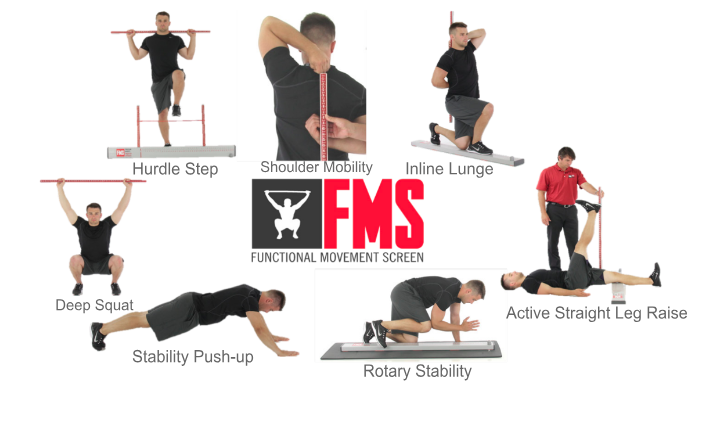
The 7 Key Movement Patterns It Evaluates:
Scores are given for the Functional Movement Screen from 0-3:
0 – pain during any part of the movement
1 – the individual cannot perform the movement even with compensations
2 – the individual performs the movement using compensation and poor mechanics
3 – the individual can perform the movement without any compensations
Many of the movements are bilateral, meaning they happen on both sides of the body. These movements will be graded separately on each side. The total sum of scores will range from 0-21 points, and any individual with a score of less than a 14 has a higher chance of sustaining an injury, and pain during any movement is also a strong indicator of high risk of injury.
Corrective exercises can be given to treat problem areas that were revealed in the FMS.