Explore Over 100 Pathways to Your Future

Majors, Degrees & Programs
About

Why do we use InBody Scan for Body Composition?

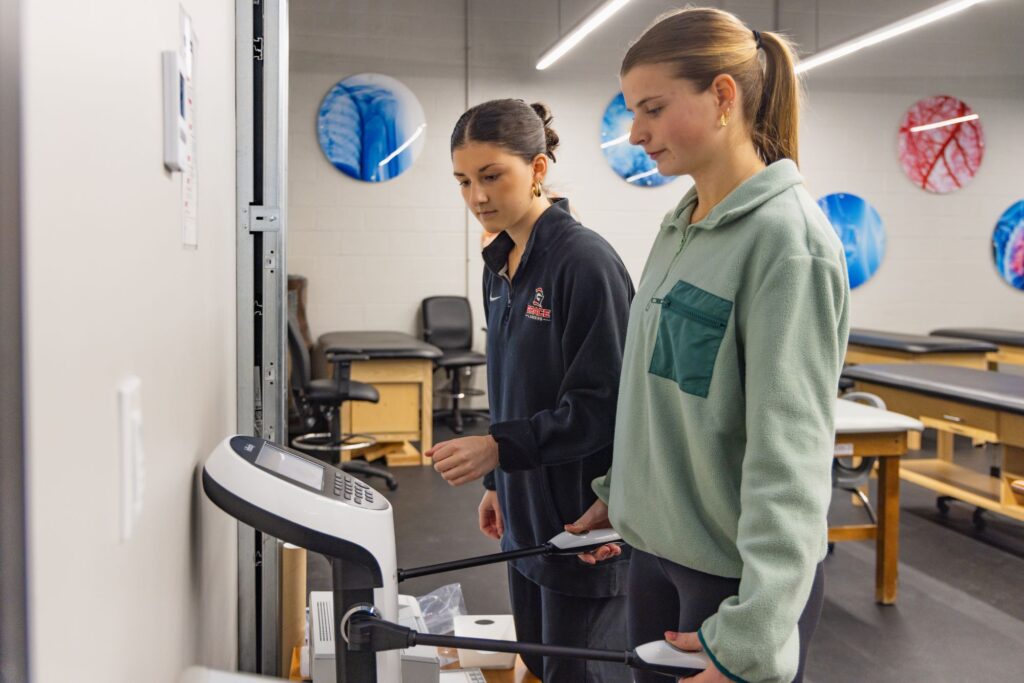
InBody Scan for Body Composition

Body composition gives a more complete picture of health by measuring fat, muscle, bone, and water. There are several different methods to measure body composition, but we have chosen to use the InBody Scan.

The InBody Scan is a type of bioelectrical impedance analysis device–meaning it sends safe, low-level electrical currents through the body, and it calculates total body water. The electrical current flows differently through different body components like fat and muscle, and this is how it distinguishes between them. It is quick, non-invasive, and reliable.

Key Measurements the InBody Scan Does: 

Measurement Description
Weight How much your body weighs overall
Body Mass Index (BMI) Compares weight to height
Body Fat Percentage What percentage of your body is made of fat
Lean Body Mass  Everything that isn’t fat: muscle, bone, water 
Segmental Lean Analysis  Measures muscle in each part of body
Visceral Fat Level Fat that surrounds abdominal muscles 
Basal Metabolic Rate  How many calories your body burns at rest 
Skeletal Muscle Mass  The amount of muscle attached to bone
Intracellular and Extracellular Water Water inside and outside of your cells

Methods of Measuring Body Composition: 

  • Bioimpedance – using electrical currents (like the InBody Scan) to measure total body water. Hydration can alter results, but it is affordable and easily accessible.
  • Skinfold Measurements – using special calipers to measure skinfold/subcutaneous fat. Very portable and convenient, quick and painless.
  • DEXA Scan – using low-level X-ray. Requires professional medical training. This is the most preferred method.
  • Hydrostatic weighing – using water displacement while fully submerged in water. The most accurate method, but it requires special equipment and is not widely available. Similarly the BodPod uses air displacement.