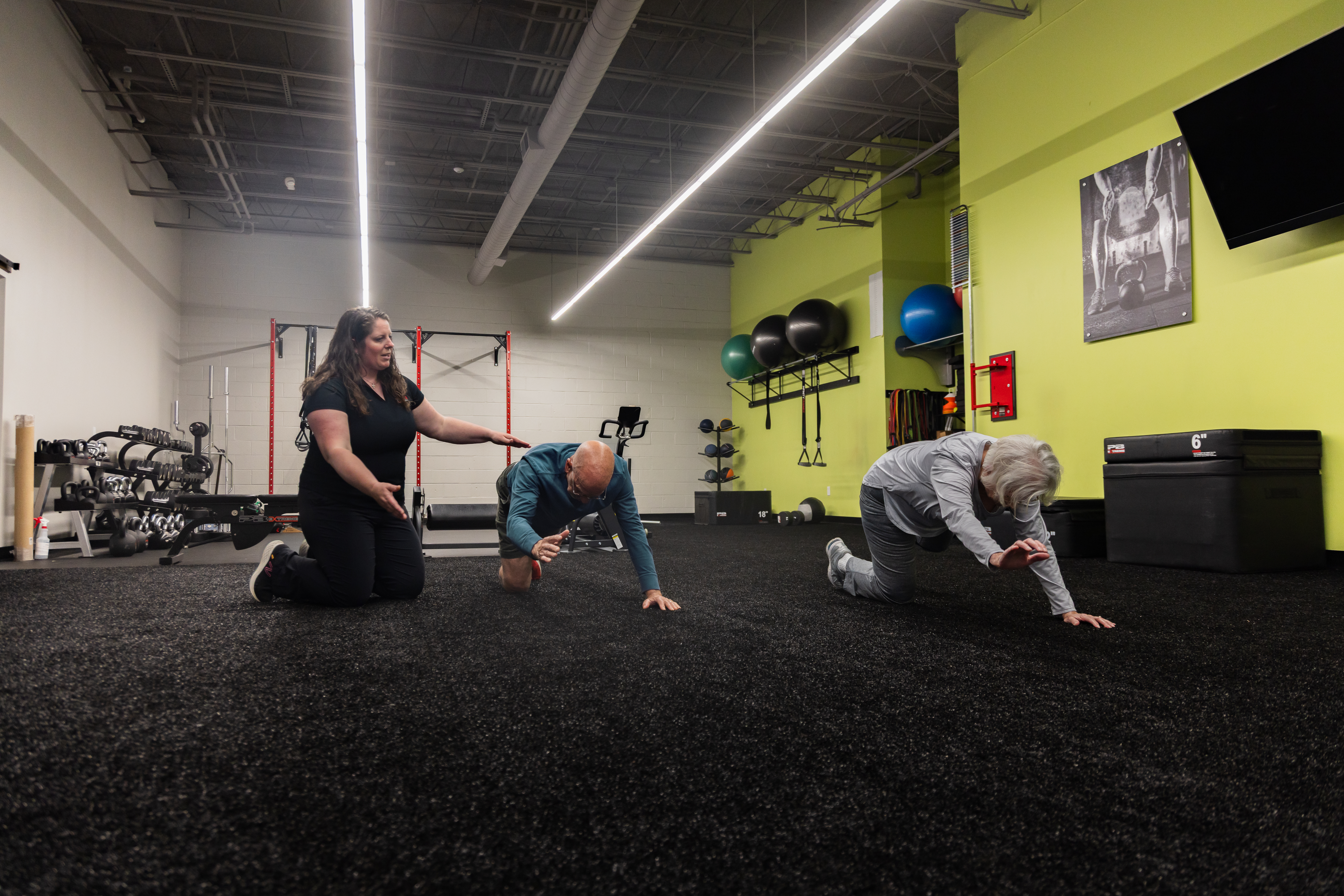
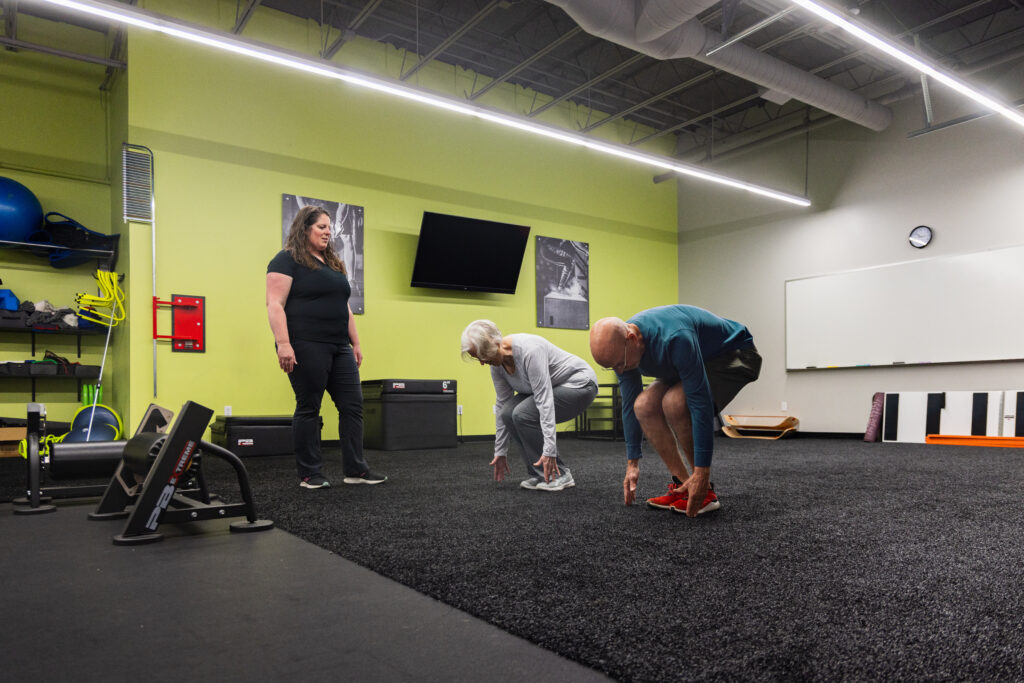
Movements like crawling, hip hinging, standing, and getting up are all key movements that we learn at a young age; we all need to be able to do them. But throughout life, we sometimes develop weaknesses in strength, stability, or mobility in certain parts of the body, and because of these weaknesses, we begin to compensate–we find a less efficient way to achieve the movement we need to. These compensations are like taking a less efficient route to the destination (think taking a dirt road instead of the highway). The problem here is, they can further exacerbate weaknesses and imbalances in the body.
How do we correct these poor movement patterns and compensations? We use corrective exercises. These exercises help to restore proper mobility and function; they prioritize quality of movement over quantity or rep number. And corrective exercise can also help address the weaknesses in our stability or mobility that have caused the poor movement patterns.
Corrective exercises work to reinforce and reestablish these primitive, key movements. They can reteach some of that basic pattern, and over time can retrain our muscles to take the best route–the “highway”– to the destination. Consistency in corrective exercise programs leads to enhanced movement efficiency and function (Bagherian, 2019).
The truth is that anyone could have a wonky movement pattern that needs readjusting.
Corrective exercises can help those about to start a new exercise program to determine problem areas early, or they can help those who have chronic stiffness or pain. If you work at a desk and struggle with poor posture or neck/back pain, you could benefit from corrective exercises. The elderly can use corrective exercises to improve balance and joint mobility.