The STEM Lovers
To succeed in mechanical engineering jobs, you need a strong foundation in both science and math. Developing your skills in high-level mathematics is especially important so you succeed in your beginning engineering courses, like calculus.
“Math is the language that we use to communicate how the mechanics of the world works,” Chair of the Department of Engineering Dr. Fred Wentorf said. “The ability to do math at a high-level separates the engineer from just a Lego builder.”
As a future engineer, it’s important to take these courses early. According to Ethan Stanley, a mechanical engineering major, you should start pursuing these classes in high school.
“I would recommend taking many college credit core classes and possibly math and science classes, specifically physics, chemistry or a base level, like calculus,” said Stanley. “That’ll really help you.”
Some of our mechanical engineering students continue to refine these math and science skills by attending engineering conferences such as the Great Minds in STEM Conference (GMIS). For you, this could offer the opportunity to discover more about what engineering is, build connections, and learn more about your future career.
Further, developing a deep understanding of science and math helps you form a more biblical perspective of engineering.
“Appreciating the science that you’re learning means really trying to understand how God put the world together,” said Wentorf. “We get to see Him in a very different way as engineers.”
The Creators
If you enjoy designing, building, and creating, you might be called to engineering. What better way to honor Christ than through the art of creation and design?
According to mechanical engineering major Julian Claybough, this is exactly what interested him about engineering.
“I’ve always thought of myself as a bit of a tinkerer,” said Claybough. “I like to repair and work on things, and I love the idea of creation. You can work to make any kind of machine, process, and product real. Engineers build the world.”
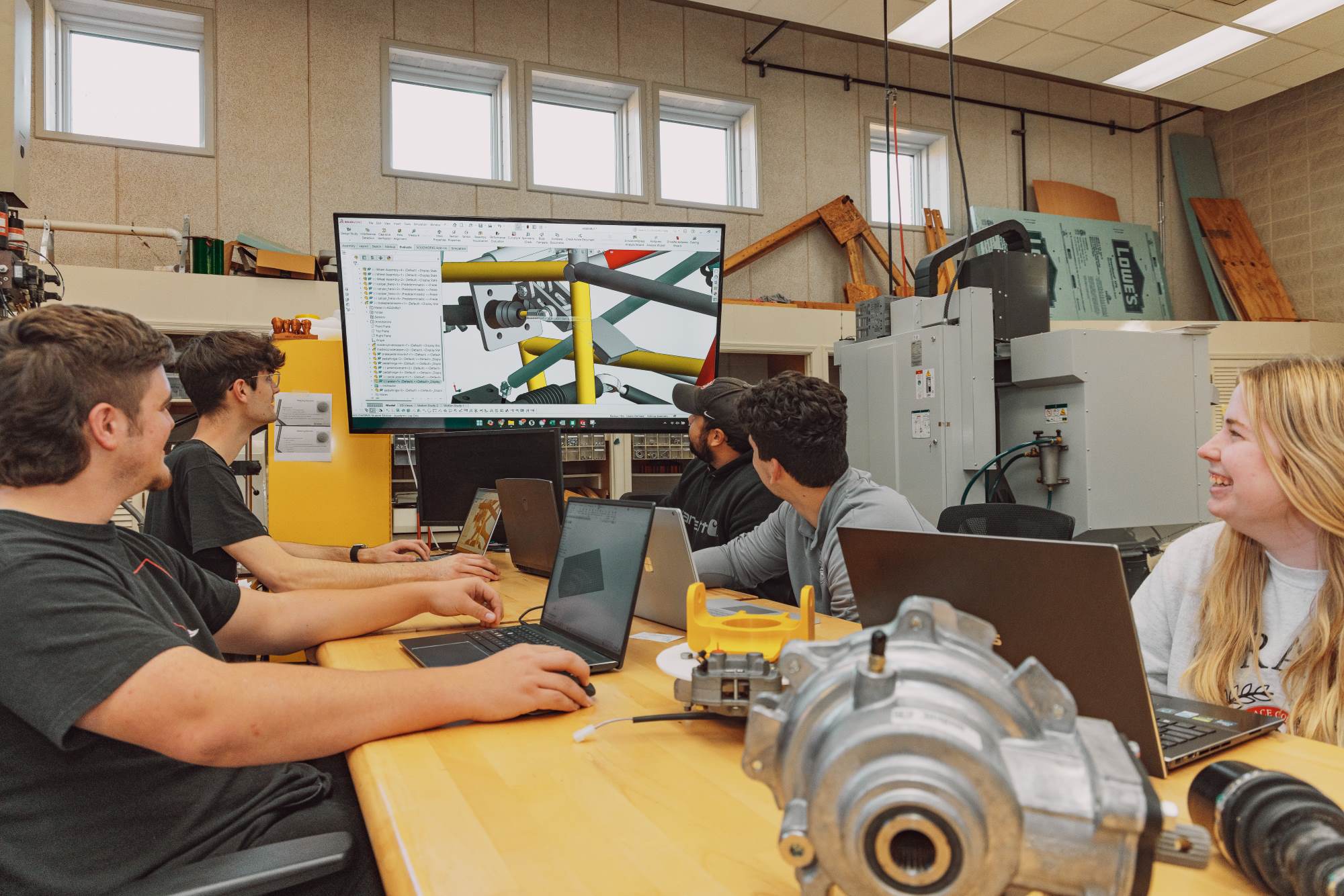
In Grace’s engineering program, one key way for students to practice the art of creation is by designing Baja racecars. During this process, Grace students attend a Baja Society of Automotive Engineers (SAE) competition. They spend weeks designing their vehicles, then race them against other nearby colleges. This opportunity not only allows them to practice testing their own products, but also gives students a chance to apply the life skills they learned in their engineering classes.
So, What Now?
Now that you’ve learned who should study engineering and about the types of mechanical engineering jobs available, it’s your turn to consider whether engineering is for you. Research more about the benefits of a mechanical engineering salary, explore different college engineering programs, study the wide variety of career options in front of you, and continue to learn what you are interested in!
“Engineering majors are in demand — not just in the United States, but throughout the whole world,” said Stanley.
If you feel that God created you for design, discover more about the benefits of a Christian liberal arts mechanical engineering program.