As a health science major at Grace, you’ll be equipped with the mathematical and scientific skills necessary to prepare for graduate medical training in a variety of fields. A pre podiatry concentration will prepare you for graduate podiatry training.
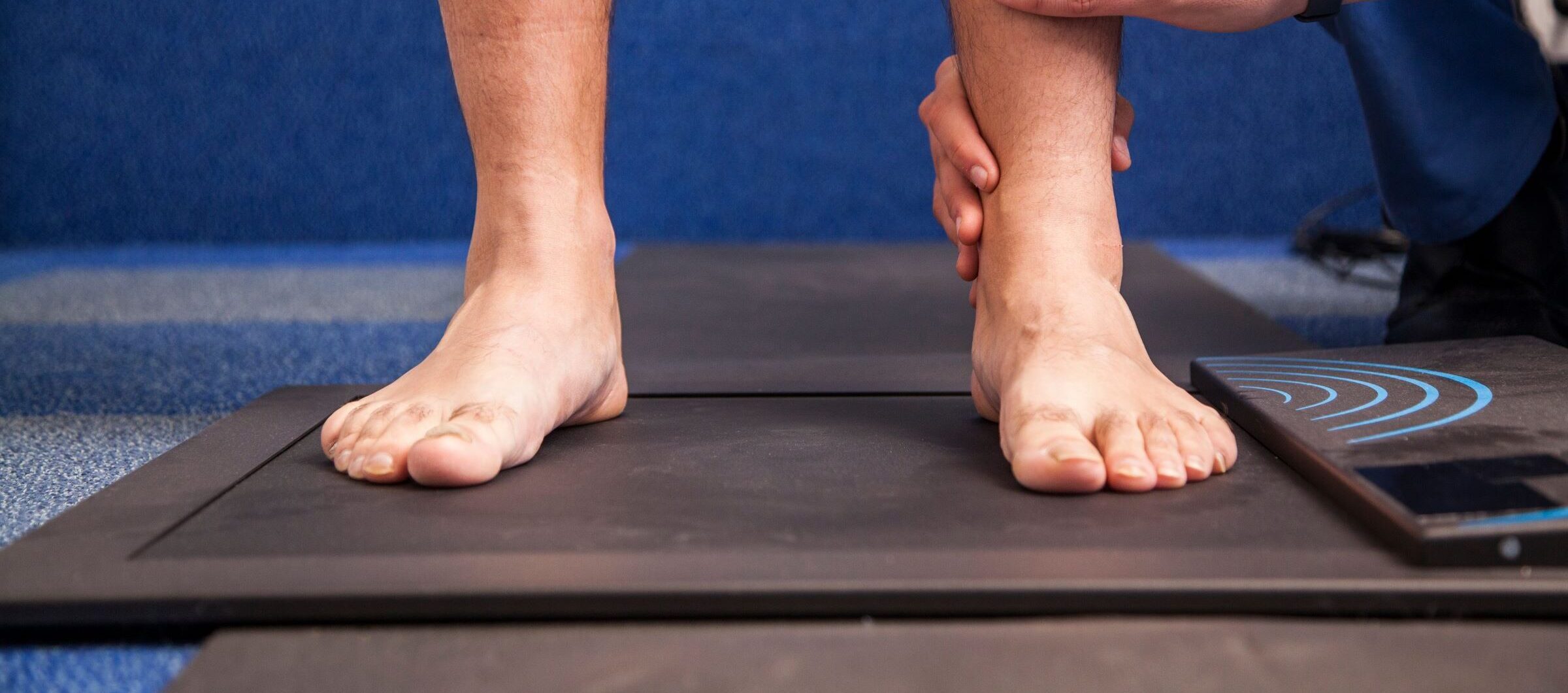
Podiatrists care for foot and ankle issues, including performing surgery. Because podiatrists generally don’t treat emergencies, podiatry is seen as a lower stress field of medicine. Podiatrists often make strong connections with patients, caring for them regularly over the course of years.
Grace’s health science program is founded on the truth that the human body is an incredible creation of God. We acknowledge His role in not only its creation but in His providing for our health, whether that’s through the body’s ability to heal itself or the knowledge He gives us to promote healing through medicine.
You’ll begin the program with foundational science courses and labs in fields such as biology, ecology, and physics, along with specialized biology courses of your choice. At Grace, our health science faculty will know you by name, mentoring you academically and supporting you in living out your faith as a scientist. Our faculty will be present at your labs and available to answer your questions.
A distinguishing characteristic of Grace’s health science program is that each student is required to complete field learning. With a pre podiatry concentration, you’ll shadow practicing podiatrists or serve in an entry-level healthcare occupation. Through your learning experience, you’ll get an in-depth look at the healthcare system, better allowing you to visualize yourself in a career before tackling the rigors of graduate medical education.
After you graduate with a pre podiatry health science degree, you’ll be able to continue your education at a graduate institution, leading to a medical career in podiatry. If you choose not to pursue graduate studies, you’ll still be equipped for a variety of health science jobs, such as laboratory work, medical sales, or even life science education.

Ph.D.
Associate Dean, School of Science and Engineering; Pre-Health Professions Coordinator; Associate Professor of Biology

M.S.P.T.
Chair, Department of Life Sciences; Director, Biology Program; Assistant Professor of Biology
A bachelor’s degree in health science can provide several opportunities within the vast field of healthcare; however, extra education at a graduate school is often required for most positions.
Healthcare Administrator
Organizing and managing health care services, including facilities, programs, and staff budgets. With a health sciences major, you can work in healthcare administration jobs such as a nursing home administrator, health information manager, or insurance underwriter.
Dietician/Nutritionist
Helping people examine and improve their health and lifestyle based on your knowledge of food and nutrition. With your health science degree, you can take this career to nursing homes, cafeterias, clinics, schools, or local government.
Radiology and Ultrasound Technician
Performing medical imaging examinations and treatments to help patients find a diagnosis with your bachelor of health science.
Occupational Therapist
Helping patients who are ill, injured, or disabled learn to do daily activities so that they may live to their fullest in the face of a medical crisis. A health science degree gives you the knowledge and skills needed to work with injured patients regaining everyday skills, disabled children learning to be capable in a school setting, and more.
Physician Assistant
Taking medical histories, conducting physical exams, diagnosing and treating illnesses, and many other responsibilities. As a PA, you will work directly with other healthcare providers, collaborating and learning from licensed doctors.
So many more
There are a plethora of other roles available for a health science degree, including a drug and alcohol counselor, laboratory technician, pharmaceutical salesperson, claims reviewer, and more!
A standard bachelor’s degree in health science can be completed in four years. Further education in a master’s or doctoral program can vary.
A health science major is the study of life and health, generally for healthcare.
Along with general education, health science majors will take foundational courses in subjects such as Biology, Ecology, and Physics. As the degree progresses, classes become more specialized, like Microbiology and Organic Chemistry.
Yes, health science is a good major, as it offers various career pathways and provides job security, as healthcare workers are in constant demand.
Besides taking intense classes, health science majors spend time in laboratories conducting experiments, shadowing specific medical professionals, and socializing with peers. Read What to Expect as a Health Science Major to learn more about what health science majors do.
Pre-podiatry in health science focuses on providing students with the foundational knowledge they will need to pursue training in podiatric medicine. In a career as a podiatrist, you’ll treat people with injuries or disabilities below the patient’s knee. You’ll provide surgery, treatment plans, and foot services.
As a pre-podiatry major in an exclusive field, you are in high demand. This program helps prepare students for careers as podiatrists by providing the foundational knowledge they need to pursue a degree.
In the role of a future podiatrist, you might assist with tears or fractures of the foot or ankle, heel or arch difficulties, and specific health conditions such as diabetes. In your role, you will review patient history, perform a physical exam, and sometimes conduct a diagnostic exam. Through this process, you will develop a treatment plan for your patient.
In this major, you will study Advanced Chemistry and Physiology, General Biology, Microbiology, and Physics. These classes will teach you about microorganisms, the role and properties of matter, and how different parts of the body function. This will provide you with the medical knowledge you need to do well on the MCAT, an exam required for graduate school.
In order to practice podiatry, you need a medical degree. Your pre-podiatry classes will provide you with the content knowledge you need to do well on your MCAT entrance exam. Through your experiences at Grace, you will develop problem-solving, critical thinking, and study skills essential for a competitive program. We will guide you as you navigate through the process of filling out graduate school applications to prepare you for success after completing the pre-podiatry concentration.
of Grace grads who have been accepted to programs and have completed those programs have become medical professionals
the grade received from Niche for our top rated Winona Lake community
of Grace grads have been accepted to programs in graduate related education





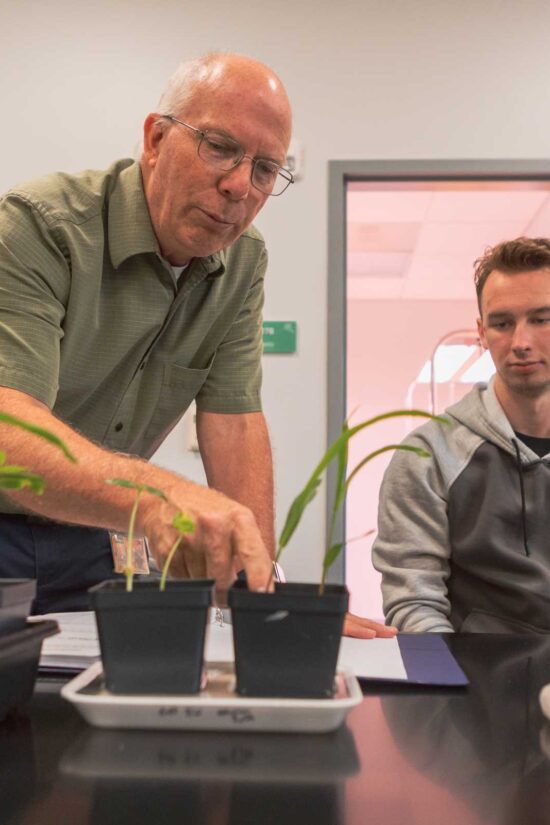
Our faculty and staff are expertly skilled in their fields and they care about your goals, future, and well being.
Meet our School of Science and Engineering FacultyAt the heart of a Grace education are academically challenging courses that are specifically designed to foster a thirst for character, competence, and service within the hearts and minds of our students.
Learn More About Our Values“Learning the sciences from a Christian perspective is invaluable. Grace's sciences shine as a beautiful light in the otherwise atheistic world of science. I appreciate the brilliant, godly, and caring faculty who set aside countless hours to help their students inside and outside of the classroom.”

Jonathan Biller
Grace College Student