How can we contribute to astrological research while exploring God’s creation?
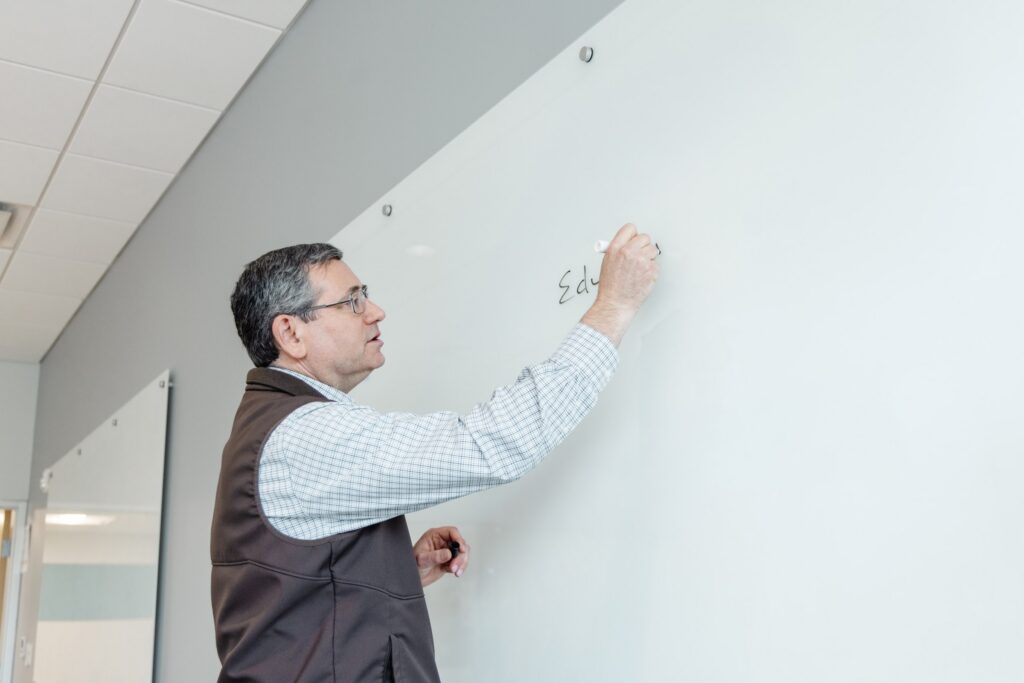
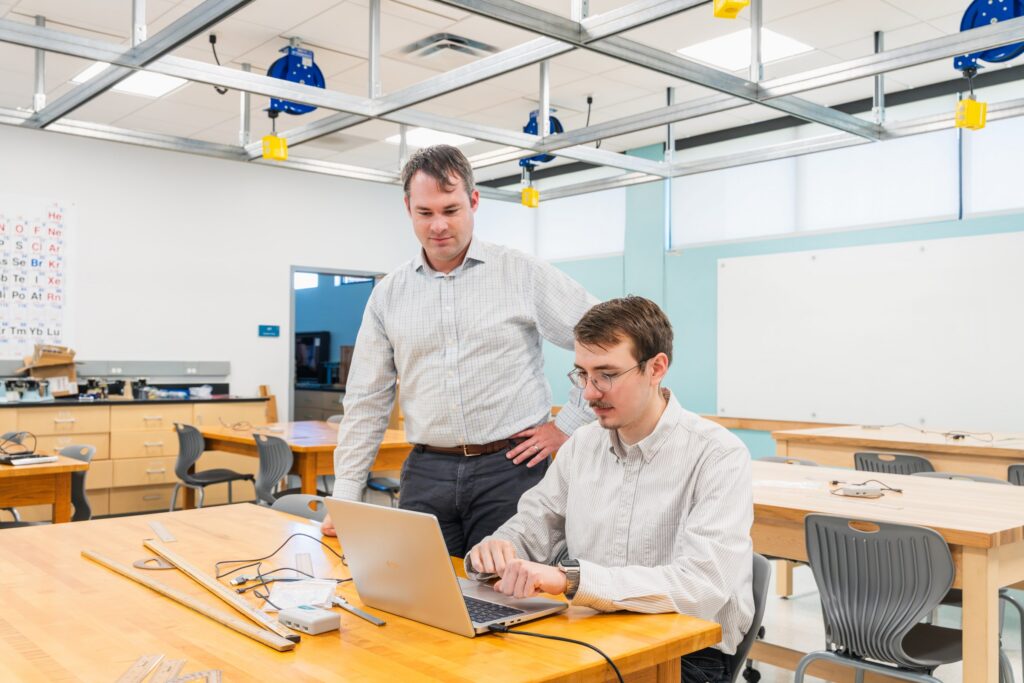
Dr. Tyler Scott, associate professor of physics, and Edward Bowald, an actuarial science student, studied double stars with the goal of identifying if they are binary and then (if possible) identifying an orbit. While there is not an astronomy major at Grace, Scott occasionally offers an astronomy elective, a class that Bowald took last year. It was through this class that Bowald was offered one of the undergraduate research opportunities over the summer.
Their research included observation of stars through telescopes in the Canary Islands, Chile, and Australia. Scott and Bowald first confirmed that stars are binary and then took measurements of the spacing and where they are relative to each other, in hopes of calculating their orbits around each other over time. Some of the stars they observed have been previously identified, but they also worked toward discovering new stars that were unreported at the time.
“Binary stars are very important for astronomy. A lot of important breakthroughs of astronomy, such as measuring distances to stars and measuring masses of stars, have been possible by studying binary stars,” said Scott. “Another important thing about our research is just studying the world around us. Even if there isn’t a technological breakthrough that comes from this, it’s interesting to study God’s creation.”
“Our research is a lot about contribution,” said Bowald. “We read a lot of papers that people have already published to help us with our own project. We’re hoping to contribute some observations that help people down the line make better calculations.”
When the research is finished, Scott and Bowald plan to publish their findings in the Washington Double Star Catalog in the Naval Observatory in Washington D.C., a database filled with information on double stars collected by thousands of researchers.
As an undergraduate student, Scott also had the chance to take part in an astronomy project, which influenced him to study physics more deeply and eventually become a physics professor.
“I think one of the most useful things that a student can learn from a research project like this is that research is accessible,” said Scott. “You don’t have to have a Ph.D. to do research. You just have to be curious and willing to work through challenges.”
Do you want a school that offers undergraduate research opportunities in a variety of fields, allows students to research directly alongside faculty, and is passionate about conducting groundbreaking studies that actually impact lives? Come to Grace, where you will be supported in small-sized classes led by intentional professors who want to see you grow academically and spiritually. Here, it’s not a question of, “Will I be mentored?” Rather, it is a journey to see how purposeful mentorship will change your future.