Explore Over 100 Pathways to Your Future

Majors, Degrees & Programs
Health Science Major with Pre-Optometry Programs at Grace College, a Christian College prepares you for graduate school & healthcare field.
Programs & Majors
Health Science

Health Science Pre-Optometry Concentration

  • On-Campus

As a health science major at Grace, you’ll be equipped with the mathematical and scientific skills necessary to prepare for graduate medical training in a variety of fields. Pre optometry programs prepare you for graduate optometry training.

Optometrists do so much more than prescribing glasses and contact lenses. The eye is a window into a variety of other health issues that an optometrist detects and addresses before significant damage occurs.

Grace’s health science program is founded on the truth that the human body is an incredible creation of God. We acknowledge His role in not only its creation but in His providing for our health, whether that’s through the body’s ability to heal itself or the knowledge He gives us to promote healing through medicine.

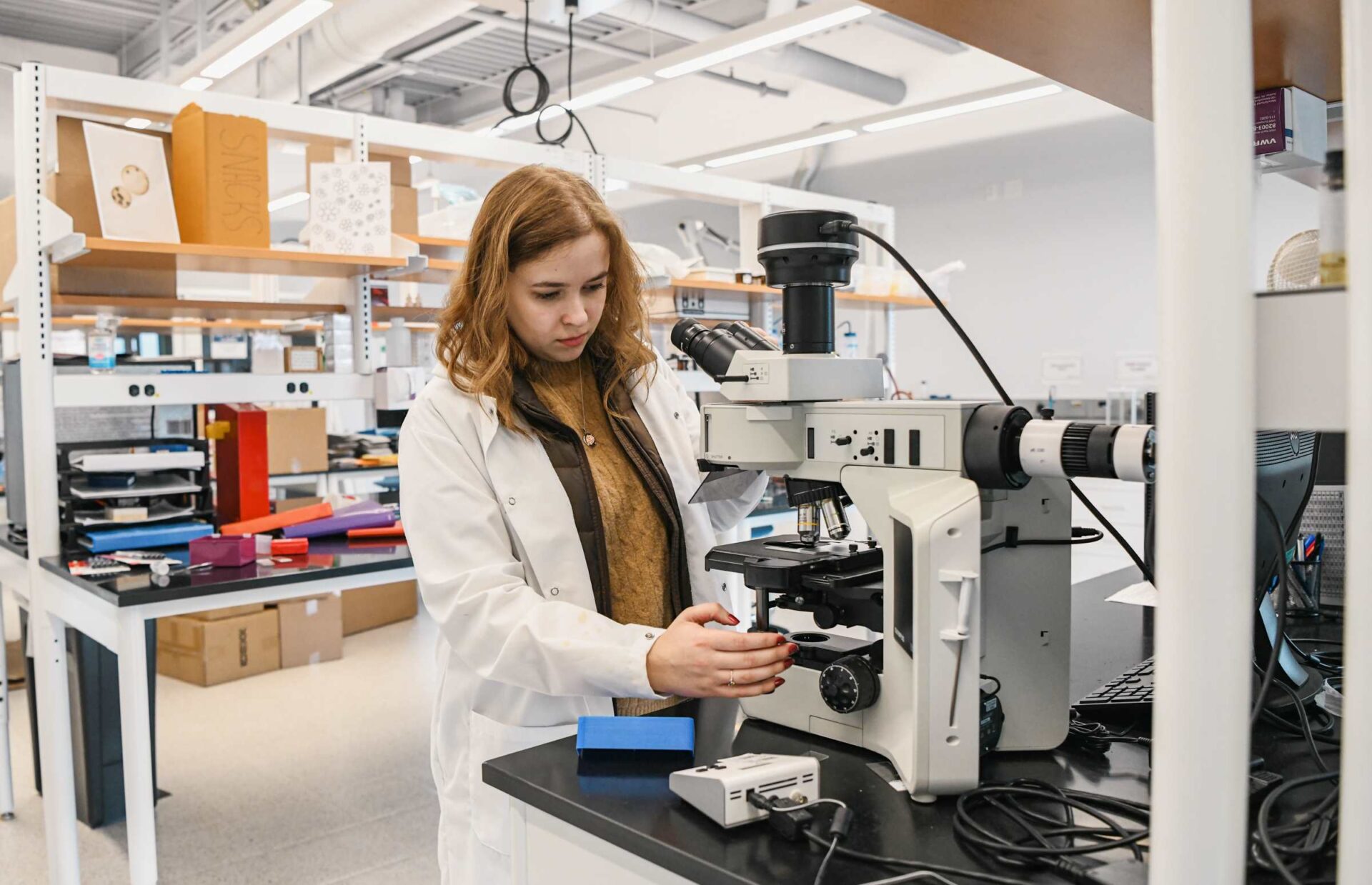
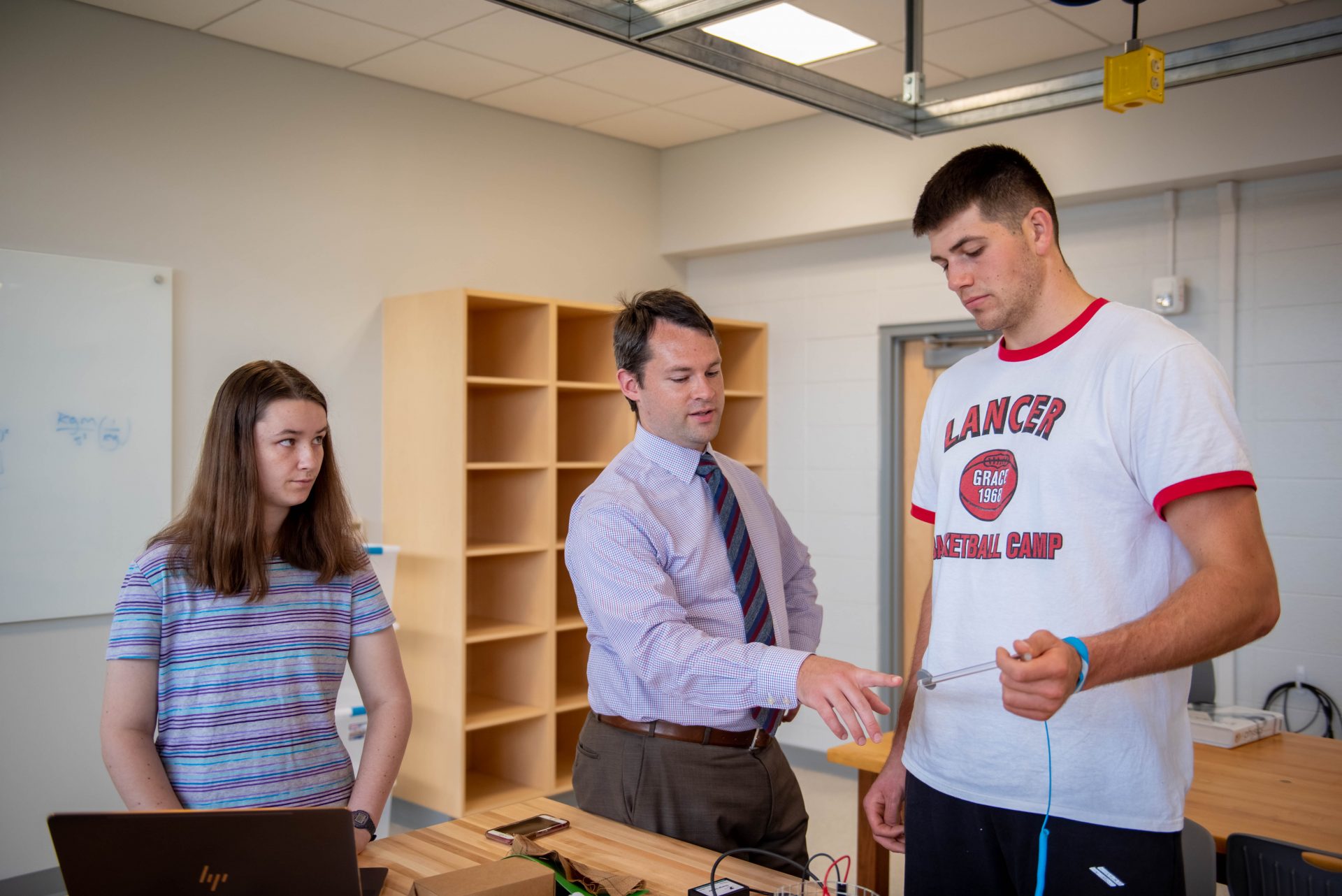
You’ll begin the program with foundational science and mathematics courses in fields such as biology, ecology, physics, and anatomy and physiology. Know that faculty will be present at your labs. At Grace, our health science faculty will know you by name, mentoring you academically and supporting you in living out your faith as a scientist. Our faculty will be present at your labs and available to answer your questions.

A distinguishing characteristic of Grace’s health science program is that each student is required to complete field learning. With a pre optometry concentration, you’ll shadow practicing optometrists or serve in an entry-level healthcare occupation. Through your learning experience, you’ll get an in-depth look at the healthcare system, better allowing you to visualize yourself in a career before tackling the rigors of graduate medical education.

After you graduate with a pre optometry health science degree, you’ll be able to continue your education at a graduate institution, leading to a medical career in optometry. If you choose not to pursue graduate studies, you’ll still be equipped for a variety of health science jobs, such as laboratory work, medical sales, or even life science education.

Health Science Pre-Optometry Concentration is great for those who are:
  • People Oriented
  • Focused
  • Team Player
  • Good Communicator
  • Driven
  • Detail Oriented
  • Caring
  • Empathetic
Educational Focuses
  • Advanced Anatomy & Physiology
  • Genetics
  • Field Learning - Healthcare Observation & Experience
Internship Opportunities
  • Local Medical Professionals
  • Kosciusko County Hospital Systems
  • Warsaw Orthopedic Companies
Top Medical Schools our Graduates Have Attended
  • Ohio State University
  • Washington University, St. Louis
  • AT Still University
  • University of Minnesota
  • University of Iowa
  • Butler University
  • Michigan State University
  • Logan University
  • Purdue University
  • Southern Methodist University
Featured Staff Member
Richard Roberts Pre-Health Professions Coordinator; Associate Professor of Biology
Rick Roberts

Ph.D.

Associate Dean, School of Science and Engineering; Pre-Health Professions Coordinator; Associate Professor of Biology

Featured Staff Member
Joe Frentzel Chair, Dept. of Science and Mathematics & Program Director, Biology
Joe Frentzel

Ph.D.

Dr. Eugene Inman Endowed Chair of Science and Mathematics at Grace & Program Director, Biology

What can you do with a health science bachelor degree?

A bachelor’s degree in health science can provide several opportunities within the vast field of healthcare; however, extra education at a graduate school is often required for most positions. 


Healthcare Administrator

Organizing and managing health care services, including facilities, programs, and staff budgets. With a health sciences major, you can work in healthcare administration jobs such as a nursing home administrator, health information manager, or insurance underwriter.


Dietician/Nutritionist

Helping people examine and improve their health and lifestyle based on your knowledge of food and nutrition. With your health science degree, you can take this career to nursing homes, cafeterias, clinics, schools, or local government.


Radiology and Ultrasound Technician

Performing medical imaging examinations and treatments to help patients find a diagnosis with your bachelor of health science. 


Occupational Therapist

Helping patients who are ill, injured, or disabled learn to do daily activities so that they may live to their fullest in the face of a medical crisis. A health science degree gives you the knowledge and skills needed to work with injured patients regaining everyday skills, disabled children learning to be capable in a school setting, and more.


Physician Assistant

Taking medical histories, conducting physical exams, diagnosing and treating illnesses, and many other responsibilities. As a PA, you will work directly with other healthcare providers, collaborating and learning from licensed doctors.


So many more

There are a plethora of other roles available for a health science degree, including a drug and alcohol counselor, laboratory technician, pharmaceutical salesperson, claims reviewer, and more!


See Full Article 
How long does it take to get a health science degree?

A standard bachelor’s degree in health science can be completed in four years. Further education in a master’s or doctoral program can vary. 

What is a health science major?

A health science major is the study of life and health, generally for healthcare.

What classes do you take in a health science program?

Along with general education, health science majors will take foundational courses in subjects such as Biology, Ecology, and Physics. As the degree progresses, classes become more specialized, like Microbiology and Organic Chemistry. 

Is health science a good major?

Yes, health science is a good major, as it offers various career pathways and provides job security, as healthcare workers are in constant demand. 

What does a health science major do?

Besides taking intense classes, health science majors spend time in laboratories conducting experiments, shadowing specific medical professionals, and socializing with peers. Read What to Expect as a Health Science Major to learn more about what health science majors do. 

Diverse Metrics of Success

98%

of Grace grads who have been accepted to programs and have completed those programs have become medical professionals

A

the grade received from Niche for our top rated Winona Lake community

90%

of Grace grads have been accepted to programs in graduate related education

Are you looking for the best tips for the first year of college? At Grace College, we want to help you find the tips and things you need for a college dorm.
Interested in a Life Science Degree? Grace College Student Speaks to Value of Life Science Education Degree. Visit us and learn more.
Math or Science Degree at Grace College
The green roof at Grace College is innovative eco roof, designed to conserve water, trap heat and prevent storm runoff, among other benefits.
Interested in Faith and Science? Grace College, where God and Science are taught together. Ask your questions about Faith Science and Reason
Math or Science Degree at Grace College

Experienced Faculty & Staff

Our faculty and staff are expertly skilled in their fields and they care about your goals, future, and well being.

Meet our School of Science and Engineering Faculty

Education with a Biblical Worldview

At the heart of a Grace education are academically challenging courses that are specifically designed to foster a thirst for character, competence, and service within the hearts and minds of our students.

Learn about Our Mission as a College

Voices of Grace

“Learning the sciences from a Christian perspective is invaluable. Grace's sciences shine as a beautiful light in the otherwise atheistic world of science. I appreciate the brilliant, godly, and caring faculty who set aside countless hours to help their students inside and outside of the classroom.”

Jonathan Biller

Grace College Student

Learn More

Loading...