July 7, 2026
A 100% graduate school acceptance rate is rare. Yet this year, Grace College’s health science program achieved a perfect graduate school acceptance rate.
While the achievement itself is remarkable, students point to something deeper than statistics as the reason behind their success: the personalized education that comes from Grace’s intentionally small class sizes.
“Our focus at Grace is to prepare students to gain admission to graduate programs and equip them with the experience and skills they need to be successful in their programs and future careers,” said Dr. Rick Roberts, pre-health professions coordinator and associate dean of the School of Science and Engineering. “As I look at the wide-ranging placements and goals of this 2026 cohort, I am confident they will serve with humility and excellence in the world of medicine.”
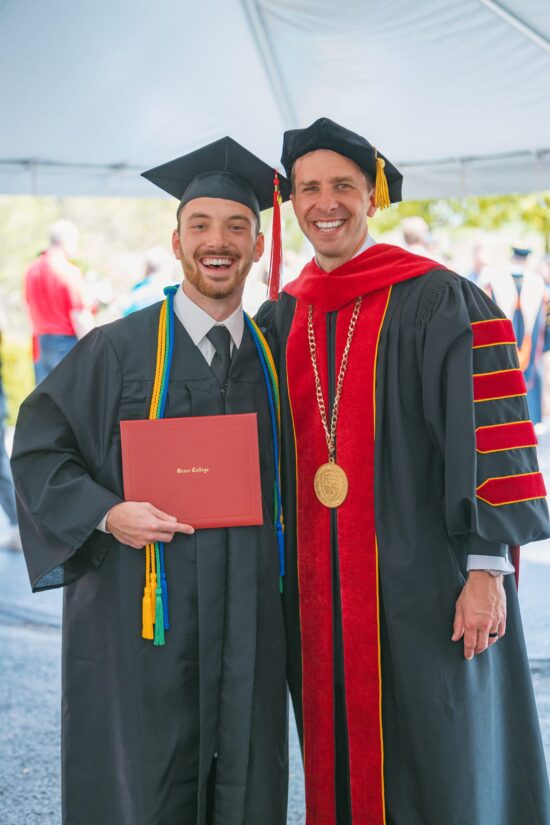
For graduates like Carter DeVoe of Indianapolis and Keenan LeBlanc of Brownsburg, Indiana, that preparation began in classrooms where professors knew their names, understood their goals, and invested personally in their success.
At many universities, introductory science courses can fill lecture halls with hundreds of students. At Grace, even the largest classes feel personal.
“My biggest class was about 55 students in General Chemistry I,” said LeBlanc. “That might not seem like a big deal, but the small class sizes and the accessibility of the professors really make a difference in your level of success.”
As courses progressed, classes became even smaller. Most upper-level science courses enrolled fewer than 20 students.
“My Organic Chemistry class had 14 people,” said DeVoe. “It felt less like a class and more like a conversation. The professor talked with us personally and helped us work through difficult concepts.”
The smaller environment created opportunities for students to ask questions during lectures, collaborate with classmates, and build relationships with faculty that extended far beyond the classroom.
“The professors know you,” said LeBlanc. “We have some of them three or four times throughout our college experience, so they already understand your strengths and struggles. When you go to office hours, you don’t spend the first 30 minutes explaining who you are. They’re already invested in helping you succeed.”
For pre-med students, preparing for the Medical College Admission Test (MCAT) can be one of the most challenging parts of the journey.
Both DeVoe and LeBlanc credit Grace’s faculty for helping them approach the exam with confidence.
“The professors do a good job of helping you know, ‘This topic is going to be extra important on the MCAT, so make sure you study it,'” said DeVoe. “Because they know all of the students personally, they can tailor their teaching toward our goals.”
LeBlanc experienced the same benefit.
“When I started studying for the MCAT, I felt like I already knew about 90% of the content for the biochemistry portion because of the way the class was structured,” he said. “The faculty know what concepts students struggle with and intentionally prepare us for what’s ahead.”
Grace’s accelerated seven-week course format also helped students develop the study habits needed for medical school.
“The speed of the classes helped prepare me for the MCAT,” said LeBlanc. “You’re learning a lot of difficult content in a short period of time, which teaches you how to process and master challenging concepts quickly.”
Faculty mentorship at Grace goes beyond answering questions and reviewing study guides. Professors challenge students to think critically, improve their work, and develop resilience.
LeBlanc remembers a particularly demanding assignment in biochemistry, where students were asked to create a virus model and explain how it functioned.
“I spent seven or eight hours on the rough draft,” he said. “Dr. Roberts let us submit drafts in advance, and he told me mine was horrible.”
The feedback, though difficult to hear at first, became a turning point.
“It humbled me,” LeBlanc said. “I realized how much work it needed. Dr. Roberts helped me rethink my approach, and eventually I earned a good grade. That experience built my confidence because I learned how to handle constructive criticism and improve.”
DeVoe experienced a similar challenge during his Genetics course, where students completed a research grant proposal modeled after real-world scientific funding applications.
“We had to research a topic that hadn’t been explored much, create a budget, determine how many scientists we’d need, and build an entire proposal,” said DeVoe. “It pushed me to connect what I was learning in the classroom to real-life applications.”
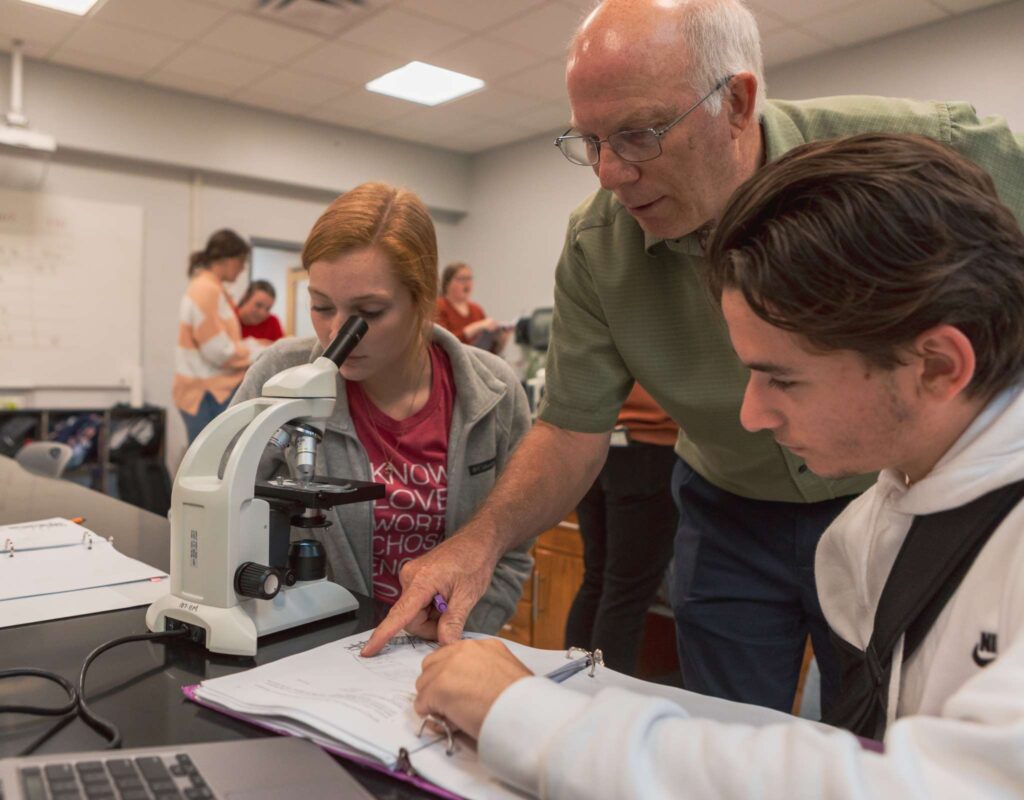
For both graduates, one of the most valuable aspects of their Grace experience was the availability of professors.
“It’s never weird to stop by a professor’s office after class,” said DeVoe. “You’ll see them in the hallway, and they’ll ask, ‘Hey Carter, do you still need help with that topic?’ You can email them anytime, and they’re happy to set up a meeting. They’re teaching you specifically — not just teaching a class.”
That personalized attention extended beyond coursework.
According to DeVoe, Dr. Roberts guided students through every stage of the medical school application process.
“He knows the process like the back of his hand,” said DeVoe. “He brought in people to explain every step, from the MCAT to applications and interviews. There was never a time when I didn’t know what I was supposed to do next.”
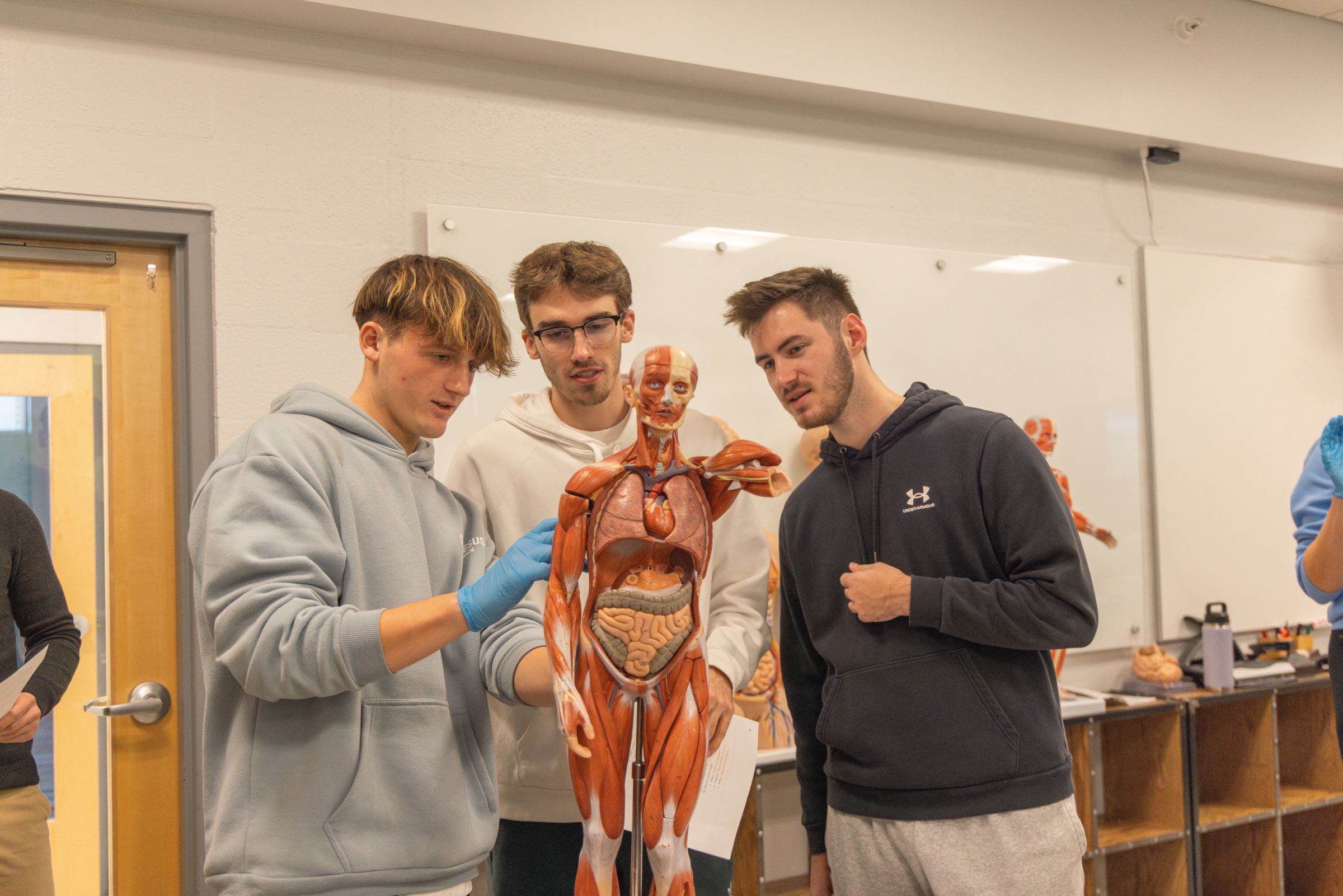
“The lab instruction was so great because I am more of a hands-on learner,” LeBlanc added. “Being able to touch and feel things was so helpful. We were actually doing the things we were learning. All of the tools we needed were always there.”
Students also appreciated Grace’s commitment to integrating faith with scientific study.
“A lot of places try to separate science from spirituality,” said LeBlanc. “At Grace, we saw how God’s design is reflected in these incredibly intricate systems of the human body. We were constantly encouraged to ask how faith connects to what we’re learning.”
“During my health science seminar class at Grace, we were introduced to doctors who had been practicing in their respective fields for decades,” said DeVoe. “One of the doctors said that in her 28 years of practice, she has never had someone turn down a prayer. That’s when I realized this is more than a career; it’s an opportunity for legitimate spiritual impact.”
“Our professors integrated prayer into the classroom and reminded us what really matters,” he said. “The foundation of faith in medicine reminds me that I am never going to know everything because I can’t understand God and his plans, and it’s ok to not understand something, but that approach will make me a good practitioner because I am always going to keep growing and learning.”
Both students believe that perspective will shape how they care for future patients.
“In medical school and residency, there will be hard days,” said LeBlanc. “But what matters most is how we connect with people and show them the love of Christ.”
When asked about how campus life supported their success, both graduates smiled. Fond memories and strong friendships forged a refuge from the difficult coursework.
“There is nothing like having all your best friends all around you and being able to walk into their rooms at any time. It was so much fun and I miss it,” LeBlanc said.
“I lived in Beta 3, which was its own experience,” DeVoe added. “It was a completely different world from my rigorous classes, and I’d get back to my room and the people had no clue how hard my day was, and didn’t even know I was pre-med. They would just say, ‘hey man, want to get food or play spike ball?’ and it was a great support system that let me relax and focus on friendships outside of classes.”
Both agreed that there were so many fun things to do in Winona Lake, and spending time with friends was an integral part of their success.
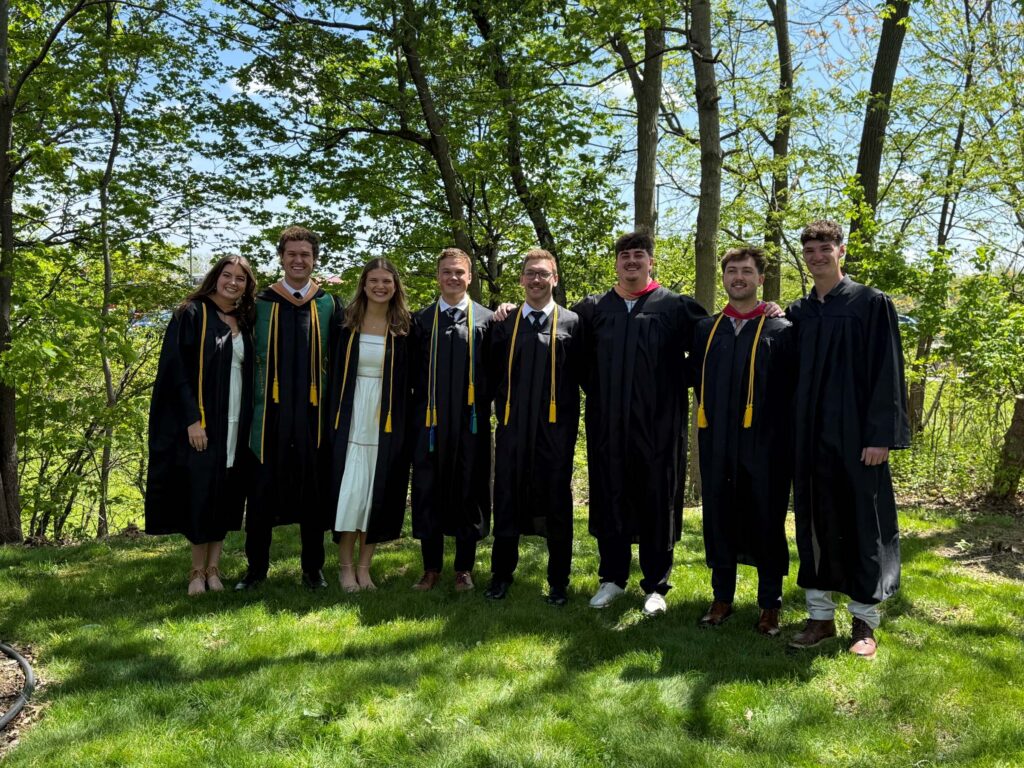
As all 17 members of Grace’s 2026 Health Science program cohort prepare to begin medical school, their stories highlight a common theme: success wasn’t built in crowded lecture halls. It was built through meaningful relationships, hands-on learning, and professors who knew each student personally.
For Grace’s newest future physicians, small class sizes didn’t just create a better college experience. They helped create a pathway to medical school — one student at a time.
Learn more about Grace’s health science program here, and explore all ten concentrations here.