
October 28, 2026
By Lukas Nier (BS 26) and Elizabeth West (BA 26)
What do you think of when you hear the words college resident assistant (RA)? You might immediately think of rule enforcement, mandatory meetings, or conflict resolution. These are all responsibilities of an RA, but at Grace College, RAs go above and beyond these duties.
Here, RAs aren’t just responsible for maintaining the residence halls; they also build relationships, provide mentorship, and help residents grow in their faith. The difference between RAs at schools across the country isn’t necessarily what their responsibilities are, but how they approach the job day in and day out. At Grace, we prioritize relationships alongside accountability, and the spiritual growth of both RAs and residents is just as important as enforcing rules and conducting room checks.
The relational role of an RA is vital, especially for freshmen who are far from home and adjusting to a completely new environment. Once an RA connects with them, they can feel more confident on campus, knowing that someone cares about them and has their back.
Vinyl Valastek, an RA in Gamma Hall, explained, “I took this role because I was encouraged by my freshman year RA. She told me that she saw a good leader in me. I am reminded why I accepted this position daily when my residents text me about what is going on in their lives.”
In Christian college residence halls like those at Grace, an individual’s well-being and spiritual health also go hand in hand.
“The best aspect of being an RA is the relational and spiritual growth you see over the course of the year,” said Ethan Vande Werken, an RA in Beta Hall. “Seeing guys come out of their shells and actually pursue deep, meaningful relationships with each other is something that always encourages me.”
RAs develop relationships in multiple ways, from simply being available to planning hall dinners and having conversations at 2 a.m. In Alpha Hall, one annual tradition is Alpha Female Week. During this time, RAs and their residents compete against other halls in challenges, such as a lip-sync battle in which the RAs choreograph dances with the girls on their hall. Weekly Bible studies, held in collaboration with the Growth Group Leader (GGL) on the hall, are another way RAs help integrate freshmen into their new home. These are just a few examples of how our student leaders build intentional relationships in our residence halls.

Building strong relationships doesn’t mean that rules go unenforced. Rather than starting with assumptions or fines, RAs can approach situations by drawing on the relationships they have already built. As Valastek explained, they strive to meet with residents and work through the issues at hand. These conversations give residents a chance to understand why certain rules are in place, take responsibility for their actions, and learn how to approach similar situations differently in the future.
“We have disciplinary actions in place that are meant to directly address the violation, while simultaneously providing a path for that student to take corrective steps,” said Vande Werken. “This path is marked by intentional accountability with the hope of building a stronger relationship rather than checking a box.”
As RAs know, difficult conversations are part of their role as college resident assistants. Accountability is strongly valued at Grace, but it doesn’t come at the expense of a healthy, loving relationship.
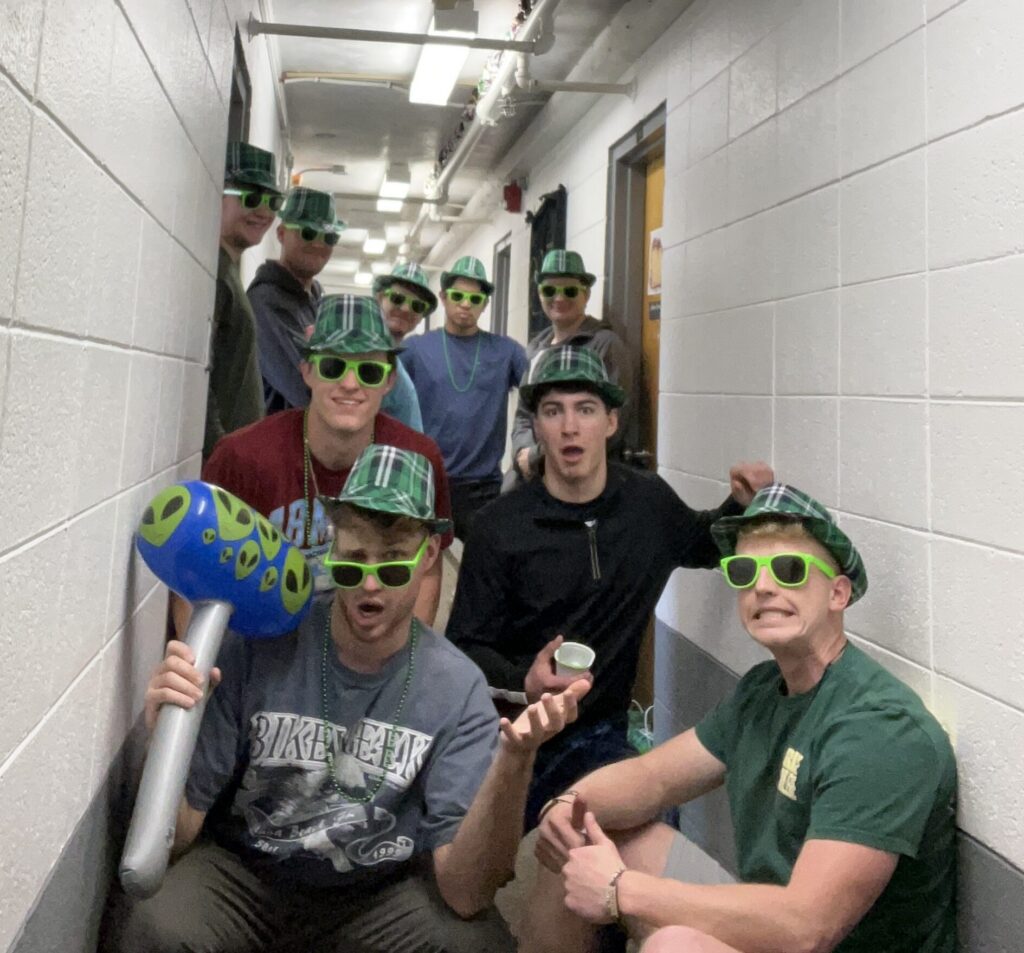
These relationships aren’t one-sided, either. RAs love helping others navigate college and personal challenges, but the role can also challenge them in many ways. These challenges give them opportunities to grow as leaders and followers of Christ.
Not every aspect of the role comes naturally or easily. Building community, handling problems, and investing in an entire residence hall floor can be difficult, especially when the results aren’t always immediately visible. But RAs aren’t alone. After completing training, Resident Directors (RDs) continue investing in RAs in the same way RAs invest in residents. This support can include weekly one-on-one meetings, regular check-ins via text, and individualized mentorship.
For Valastek, the responsibility of managing a residence hall floor didn’t become a year-long source of stress; instead, it became an opportunity to lean on God in another area of her life.
“In my sophomore year as an apartment RA, I struggled to have any community in my building. But the Lord strengthened me so much,” Valastek said.
For Vande Werken, his work as an RA has shaped his own faith. “Every time I have a deeper conversation with a resident, I’m reminded of God’s heart for me. I can rest in the fact that Jesus’ heart for me is always burning with love and compassion and will never be too tired to sit with me in tough spaces. Best of all, I have no shortage of stories when it comes to people growing in their faith. It is 100% God working in the hearts of guys in the hall and letting the community be a means of healthy accountability, which is something you likely won’t find at every college.”
Experiences like these make being a college resident assistant much more than just a job or a role focused on enforcing rules. At a Christian college, the responsibility of caring for students shapes how RAs understand responsibility, community, and their own faith. The role of an RA isn’t always easy, but the hard work that leads to personal growth and the transformation of residents is worth it.
If you are interested in learning more about the types of mentorship and community that happen at a Christian college like Grace, check out our blog “Who’s Walking With You? The Gift of Christian Mentoring in College”.