
October 29, 2026
You want to become a licensed counselor, and you want your faith to matter in how you do your work. But will pursuing a Christian program mean you’ll come out the other side only knowing how to counsel other Christians?
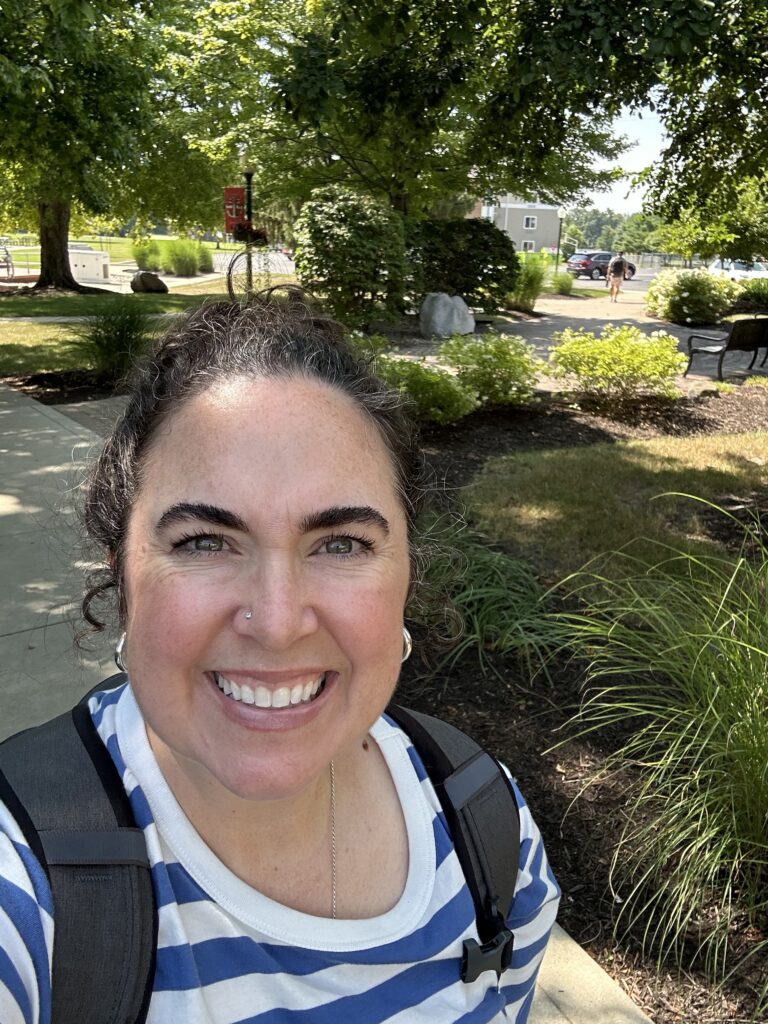
Pattie Burns, a mother of four pursuing a second career, had that exact fear. She’s now a current student in Grace’s Clinical Mental Health Counseling degree, but she almost didn’t apply to Grace because of its Christian worldview.
Read on to see what changed her mind!
When Burns considered starting Grace’s Clinical Mental Health Counseling degree, she wasn’t a stranger to the term “Christian counseling.”
“I was very skeptical about choosing a faith-based program,” Burns said.
There were two things that worried her about “Christian counseling” specifically. First, she believed the clinical training would quietly bend toward biblical counseling, which is built for church settings. She wanted to expand her practice to people outside of the church.
“I need to be prepared for the majority of people who walk through my door,” said Burns.
Second, and more personally, she’d watched too many Christians turn their counseling techniques into something closer to pressure. “I know too many people who, as Christians, seem like they are imposing their beliefs on somebody else,” she said. “I’ve been so stung by that.”
As Burns began to look at Grace’s Clinical Mental Health Counseling degree, she found that it is CACREP-accredited, the same clinical standard to which secular graduate counseling programs are held. For Burns, that mattered because it meant the program couldn’t drift from established clinical practice.
“Being CACREP-accredited meant that Grace was consistently sticking to a curriculum in a professional way,” Burns said.
Before beginning the program, Burns was able to have a personal conversation with Dr. Jill Brue, the department chair of Grace’s Master’s of Clinical Mental Health Counseling degree.
A single sentence stood out to Burns. Dr. Brue said, “This is not biblical counseling. This is preparing you, as a Christian, to be a professional counselor.”
The distinction that this program was not solely focused on Christian care, but was focused on training Christians to work with all people as licensed, professional counselors is the reason Burns was confident in her decision to enroll in Grace’s program.
What does faith integration look like in Grace’s Clinical Mental Health Counseling program? Burns describes it as an integration point most people don’t expect: faith shows up in how the program understands the human person — not faith as a replacement for clinical science, but as its foundation.
“God made all of us,” she said. “Why would we not study our minds and use the science we understand from psychology and neuroscience to help people out?”
The idea of showing God’s love to others through scientific and clinical care shows up again in how the program treats ethics. Burns appreciated the training she received on how all counselors, including Christians, must be mindful not to impose their beliefs on clients, and respect the autonomy of the client to make choices.
“It’s one of the ethical tenets; you do not impose your values onto other people,” she said. “That’s not just Grace saying that. Our professors and courses really uphold counseling ethics.”
How do you sit across from a client whose choices don’t align with your beliefs without either abandoning your convictions or abandoning your client? Burns realizes that she will sit with many clients whose lives and choices do not align with her own personal beliefs, and her job is not to impose her values and beliefs onto them.
She explained, “God has given all of us agency. It’s not up to us to try to get somebody to make a certain choice.” Rather than trying to pressure someone to adopt your own beliefs, Burns emphasized the importance of meeting someone where they’re at with humility and grace.
“If a client is Buddhist, the job isn’t to correct them,” said Burns. “It’s to ask what their beliefs have meant in their life, where they’ve been a source of strength, where they haven’t, and to meet them there.”
In times of deep distress, having someone there to sit and listen is a way to show the love of Jesus, even if you’re not directly offering advice from a Christian point of view.
Does a degree from a Christian institution lock you into church-based jobs? Grace’s Clinical Mental Health Counseling degree effectively equips students to serve in any professional mental health capacity with the clinical skills necessary to treat clients, showing Christ’s love through their actions.
“I feel prepared by Grace to work in any setting,” said Burns.
Burns looks forward to further learning in the program and using her degree upon graduation in May 2028. She hopes to share the love of Christ with others through clinical counseling.
Do you want to learn more about Grace’s Clinical Mental Health Counseling degree? Check out Maliyah’s story or hear from our program director, Dr. Jill Brue.