November 19, 2026
As health care providers increasingly value medical imaging professionals who can work across multiple specialties, Grace College is expanding its medical imaging offerings with new pathways in radiologic technology, computed tomography (CT) and magnetic resonance imaging (MRI). These offerings will launch in fall 2027 through a new “stacked” model that combines a three-year associate degree in radiologic technology with a fourth-year completion in either CT or MRI.
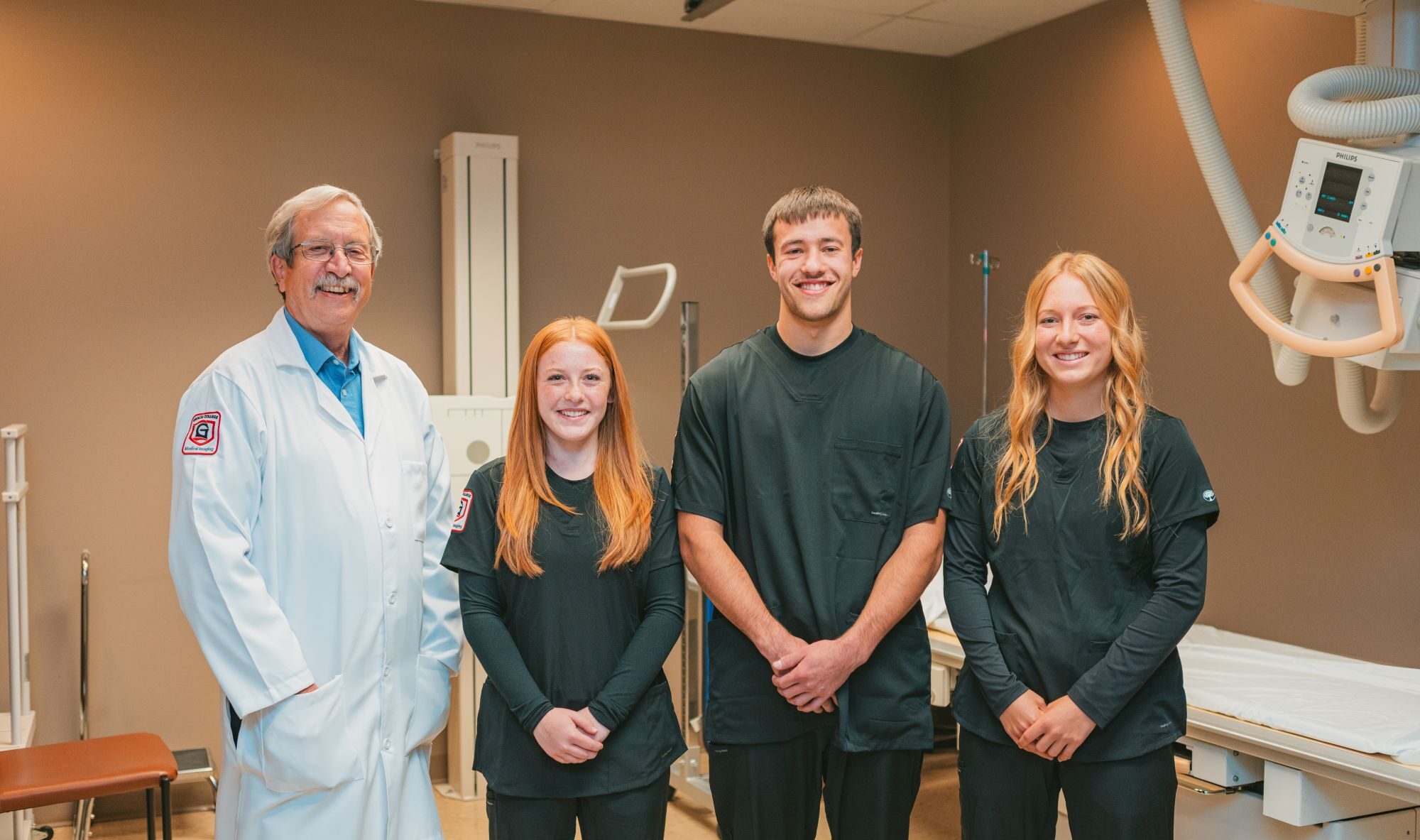
“Dual credentials really give you an advantage in the healthcare industry,” said Tom Wallin, medical imaging clinical coordinator at Grace with 40 years of experience in the field. “Hospitals want to get more mileage out of their staff, and this provides a pathway for students to be registered in more than one specialty, making them extremely marketable candidates. To be able to complete all four years of training at one institution – especially a Christ-centered institution — is a rare opportunity for students pursuing this career field.”
According to the U.S. Bureau of Labor Statistics, radiologic and MRI technologist employment is projected to grow 5% from 2025 to 2035, faster than the average for all occupations. The agency projects approximately 15,300 openings for radiologic and MRI technologists each year over the decade, driven by employment growth and the retirement of an aging workforce.
The dual-credential model gives graduates a competitive advantage by expanding the types of imaging procedures they are qualified to perform. This versatility is particularly valuable to hospitals and health care facilities seeking adaptable professionals who can serve patients across multiple imaging areas.
“Medical imaging professionals with multiple credentials bring tremendous value to a hospital setting,” said Larry Coburn, director of imaging at Lutheran Downtown Hospital in Fort Wayne. “Having team members who are trained in more than one imaging specialty gives us greater flexibility to meet patient-care needs and respond to changing staffing demands. That versatility is especially valuable in today’s health care environment, where having a skilled, adaptable team makes a meaningful difference in how we serve our patients.”
The programs will combine online technical coursework through Grace’s partnership with John Patrick University, hands-on preparation and clinical experiences and in-person foundation classes on Grace College’s campus.
As the only Christian college in the Midwest offering these specific pathways, Grace College uniquely integrates faith and science, preparing students to navigate critical medical situations while maintaining high professional standards. Beyond technical preparation, the programs will emphasize practical and compassionate, patient-centered care. Through courses like Introduction to Patient Care, students will explore patient communication and professional responsibilities from a Christian perspective.
“In science, we are given a glimpse at the creative genius of God,” said Wallin, who will instruct the course. “Everything is ordered, and none of this technology works without an ordered universe.”
Through Grace’s core curriculum, students engage with topics including faith, science and reason, Christianity, critical thinking and essential Christian doctrines. The combination provides an educational experience that prepares students to develop both professional expertise and a foundation for serving others – an approach to training Wallin says is essential, as professionals interact with patients during some of life’s most uncertain and vulnerable moments.
To learn more about the programs, visit www.grace.edu/programs/