November 10, 2026
By Ashley Durand (BS 13)
If you are a high school or college student, you may have heard your generation labeled as screen-addicted, lazy, and lonely.
But at Grace College, we believe you have more to offer.
We know that God created you with a unique, valuable perspective. Our professors are excited about some of the changes that Gen Z brings and think that they, along with Gen Alpha right behind them, have a lot to offer for a brighter tomorrow.
So what are Grace College professors seeing in their classrooms that challenges the usual narrative about young people? Much of it begins with how Gen Z college students approach learning.
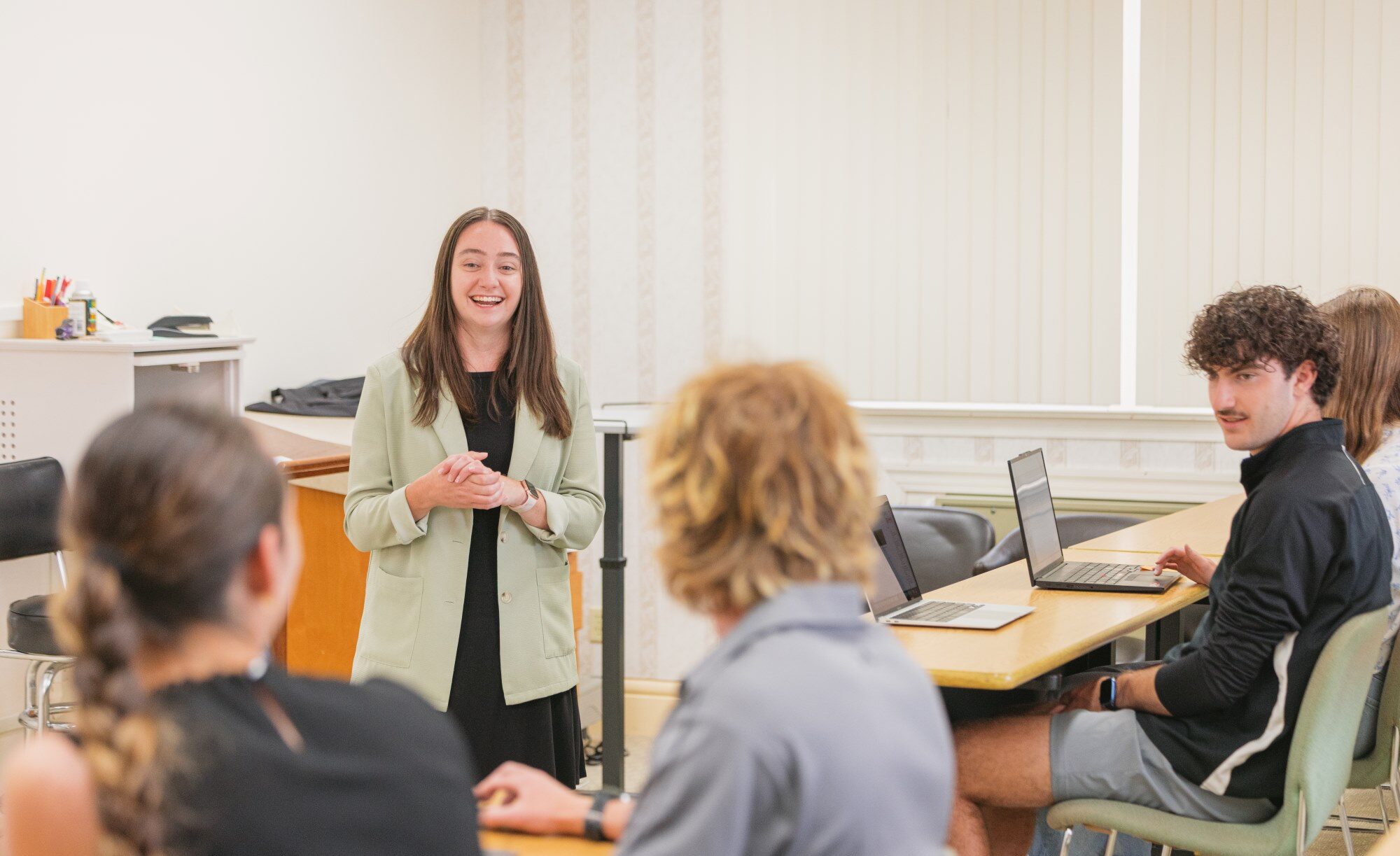
Dr. Kelly Arney, dean of the School of Behavioral Science, shared her perspective, saying, “One of the biggest differences I’ve noticed with this generation of college students is that they really want to know how what they are learning applies to the real world. They want practical skills they can actually use in their future careers, not just information to memorize for a test.”
As a result, Arney has moved away from traditional lectures and started focusing more on real-life scenarios, case studies, and hands-on activities to help students practice making decisions and solving problems they might actually face on the job.
“I’ve found that they are much more engaged when they understand why they are learning something and how they will use it,” said Arney. “I don’t think students today want to learn less; they just want to learn in a way that feels relevant and prepares them for what comes next.”
Because students long to be relevant, they ask more questions and investigate on their own, often leading them to invent new ways to solve problems.
Alicia Meyer, communication instructor, explained that students are quick to connect ideas across different subjects and wonders whether their experience navigating constantly changing digital content contributes to that ability.
“These students are so creative,” Meyer said. “They grew up in a digital space watching advancement happen every day, so they are accustomed to ever-changing standards and information. They adapt more quickly than my coworkers of older generations. These students make the most beautiful visual elements; their posters, slides, and other content use effects I didn’t even know were possible!”
Dr. Nate Bosch, dean of the School of Science and Engineering and professor of environmental science, furthered this idea.
“Gen Z has always had immediate access to lots of information, which makes them quick to fact-check professors and question what is being taught,” he said. “I have changed my teaching approach to welcome that in class, and I am able to connect them to good online sources that help them do better research.”
“That is a big advantage,” he continued. “I am increasingly noticing that my students don’t stop learning when the lecture ends. For example, we have given basic training to my students who work in our Lilly Center for Lakes & Streams aquarium lab here at Grace College. But what is exciting is that then, with access to information, they continue to research and move beyond my knowledge.”
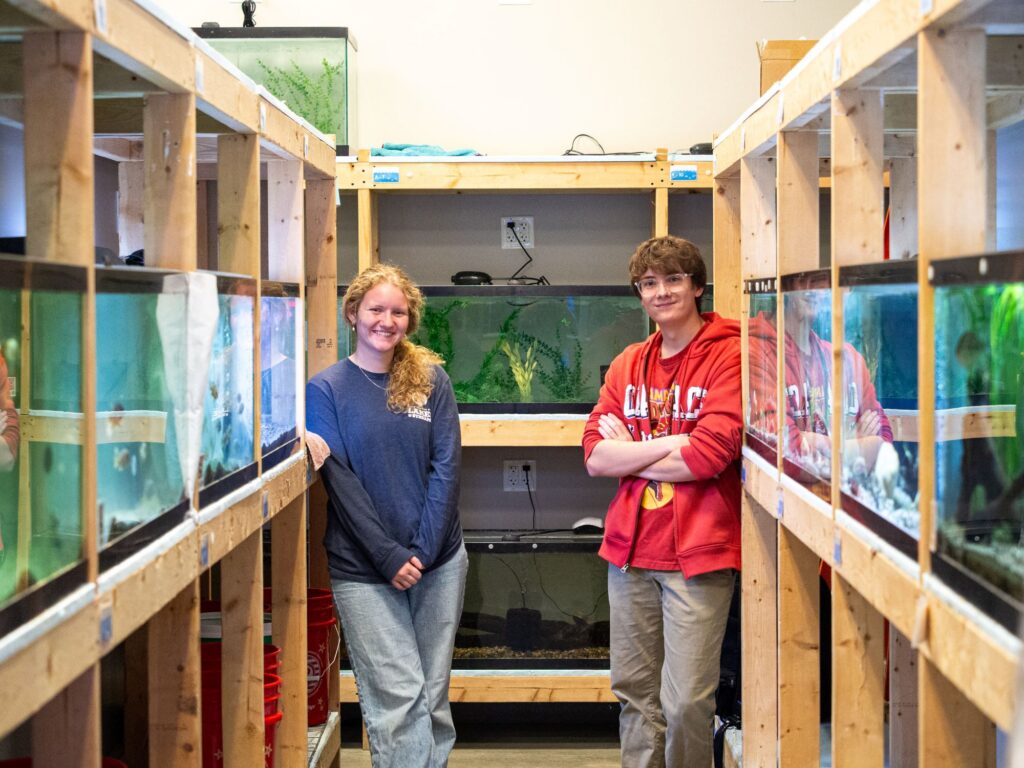
This question-asking mentality has led to students to conduct experiments in the lab on topics like physical therapy on yellow perch fish, the effects of added carbon dioxide on aquatic plant growth, and more. A group of students even conducted surgery on a rock bass that had a growth on its bottom lip. They discovered that clove oil is a natural anesthetic and used it to put the fish to sleep so they could remove the tumor on the fish’s lip.
“That is the ultimate goal of what you hope for as a professor: students become passionate enough to take learning farther,” Bosch concluded.
At Grace College, professors aren’t simply there to share what they know. They’re there to mentor and invest in students, challenge their thinking, and help them grow in ways that extend beyond the classroom. Sometimes that means guiding them to better sources of information and correct answers to their questions.
As Wally Brath, associate dean of the School of Arts and Humanities and assistant professor of worship arts, put it, “There’s a lot of information online that is not always accurate. The Internet can’t teach you discernment or wisdom. That can only be gained from being mentored by godly men and women, and through the Holy Spirit.”
That’s just what professors at Grace do: mentor students to think critically for themselves with God’s help.
Students aren’t only seeking to understand practical application of what they learn in the real world, but they also look at spiritual ideas through a different lens than many in previous generations.
“Something positive that I see in this generation is the fact that they are open to mystery,” said Brath. “In other words, the Enlightenment, which put the scientific method above the Bible and turned science into a religion, doesn’t seem to have as much weight with this generation. I think they’re okay with not knowing certain things or at least okay with wrestling with the miraculous things in the world.”
The data backs up the fact that this generation is more open to faith. In 2025, Barna released a study that found younger generations are coming to Jesus in record numbers, including a 15 percent increase in a personal commitment to Jesus by Gen Z men since 2019.
Throughout the last year, tens of thousands of college students have filled stadiums and arenas around the country to worship God at places like Clemson, the University of Miami, LA Memorial Coliseum, AT&T Stadium, and many more. They are hungry for the real God in ways that previous generations have not been.
This openness isn’t limited to the classroom or questions of faith.
Bosch shared that he thinks this generation is more willing to talk about mental health struggles and be more vulnerable. “They have the realization that they need help, from a mental health professional, but also God’s help. And this gives them a noticeably stronger spiritual hunger, a willingness to be vulnerable to get the resources that they need. That humility is crucial to our Christian walk, learning to depend on God rather than ourselves. Gen Z has a leg up on us from previous generations; they need to look outside themselves for help,” he said.
Not only are they more willing to address their own mental health struggles, but they also care more about the mental health of others.
“These students are deeply empathetic, which we’ve seen in their CliftonStrengths test that they take in the First-Year Foundations class (FYE),” said Meyer. “It’s easy for them to care about their neighbor and see from their perspective. These students are also bold. They are unafraid to ask questions or state their opinion, which can fuel change in beautiful ways.”
That willingness to acknowledge personal needs also shapes how Gen Z college students think about work, success, and what it means to live a healthy life.
Bosch also addressed differences in attitudes about work ethic. While previous generations often work out of a sense of duty and the knowledge that it was the right thing to do, Gen Z is motivated differently–but according to him, it may not be a bad thing.
Gen Z believes work-life balance and healthy lifestyle goals are worthy of reconsidering accomplishing things simply out of obligation.
“They are not afraid to stick up for themselves and realize they need to be healthy to be a good employee,” said Bosch. “When students are working in their area of passion, there is a work ethic that does bubble up that is not just ‘what I ought to do as an employee,’ but rather ‘I really love this field that I am studying or working in, because I really believe in what I am working on.’ Older generations did it out of duty, manufactured grit, and ‘pull yourself up by your bootstraps’ mentalities. This generation can do that out of passion and interest, likely in a healthier way.”
Meyer agreed, saying, “They are also searching for workplaces they feel comfortable at, and that’s different from generations that were primarily motivated by stability. Gen Z will hold out for a culture they feel excited about.”
Bosch added that students who don’t feel motivated to work hard may not have found their passion. He believes the answer isn’t simply to tell students to work harder. It’s to help them discover what makes the work meaningful.
“I see students who want to know how to make a real difference in their careers and communities,” Arney agreed. “I think sometimes we mistake their desire to do things differently for a lack of motivation. What gives me hope is that I see students who are willing to ask questions, challenge traditional ways of thinking, and look for better solutions. I think those are qualities that will serve our country well in the future.”
Meyer also cautions against viewing Gen Z through the lens of generational stereotypes.
“Hasn’t every new generation been cast as the downfall of society? Gen X and Baby Boomers feared that Millennials’ proclivity for avocado toast and coffee shops would ruin society. Similarly, people think the softness of Gen Z means we are falling apart. I think the view is reductionistic, and it undermines the ability of God to use people as he has made them. Gen Z has gifts built into them based on their life experiences, just like Boomers, Gen X, and Millennials. They may build a society that looks different than the world of previous generations, but that means there is space for creativity and opportunity,” Meyer says.
Rather than expecting Gen Z to approach the world exactly as previous generations have, these professors see an opportunity to recognize the unique gifts this generation brings and encourage students to use them well.
Throughout the Bible, God has used young people to accomplish incredible things. From young Timothy leading the early church alongside Paul, to teen Mary becoming the mother of Jesus, Scripture reminds us that age is no barrier to being used by God. Arney sees that same potential in today’s college students.
“I think God continues to work through young people today,” Arney stated. “At Grace, I see students who want to make a difference in the world. They want careers where they can help others, serve their communities, and live out their faith in meaningful ways. That seems especially true with my criminal justice students. What encourages me most is seeing students begin to connect their faith with what they are learning and how they plan to use their education. They are asking important questions about their purpose and how God can use them.”
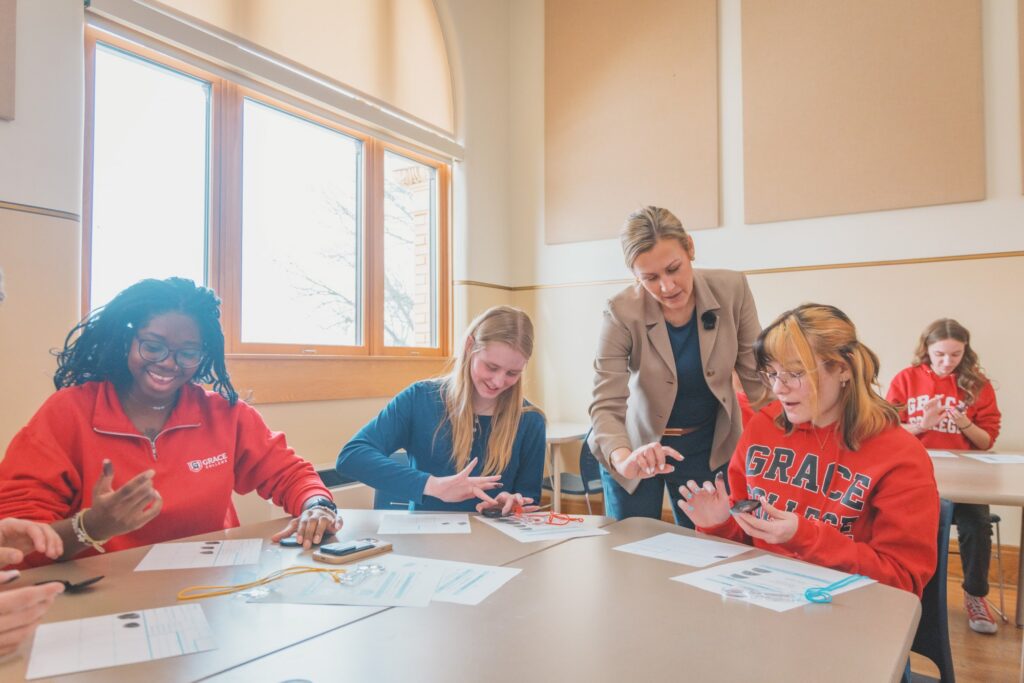
Bosch sees this generation’s unique experiences and challenges as part of how God has prepared them for the future. Just as God raised up young people in biblical times to meet the needs of their day, he believes today’s students have been equipped for the challenges they will face.
“The nation of Israel was in a dire situation when the young man David stepped up to follow God’s leading, and his obedience turned the situation around for that whole group of people. God can still use young people in powerful ways today, and I see that in our students. It is no surprise to God how this generation is, and the strengths that they have. He is equipping them for the day in which they live. Who knows what God has in store for them and what they are able to do. Our students in this current generation were meant to face these cultural pressures and big challenges that need to be solved. As Mordecai said to Esther, perhaps they were put on earth for ‘such a time as this.’ God has purposely placed this generation here at this time,” Bosch said.
Alicia Meyer believes God is providing this generation the opportunity to bring about meaningful change in society. She points to the important role young people have played in historical movements for justice and sees similar potential in Gen Z.
“So much activism has happened through young people,” she said. “I think this is prominently seen in the Civil Rights Movement. Young people were the heart and soul of the movement, and they brought meaningful change to advance the cause of justice in the United States. The Women’s Movement in the late 20th century was also led by young people. I own a home and have credit cards and my own bank accounts without being married, and none of that would be possible without some determined young women in my grandparents’ generation. I think this is Kingdom work because it is creating equity and places for all to thrive.”
“Gen Z has some of that activism in them too,” Meyer continued. “The world has been in turmoil their whole lives. They were born into a financial crisis and experienced a pandemic in their formative years. They know nothing is stable, which means everything is subject to change. That change can be for the good of the Kingdom. They see people as open to faith and are bold with evangelism. They can bring about societal change that aligns with the Kingdom.”
Rather than seeing Gen Z and Gen Alpha as generations to worry about, Grace College professors see young people with unique gifts, new perspectives, and a desire to make a difference. Their approach to learning, work, relationships, and faith may look different from that of previous generations, but those differences also create opportunities. As these students discover how God has equipped them, they can use those gifts to serve others and shape the world around them.
If you are interested in pursuing higher education so that you can make a difference using your God-given talents, please reach out to our admissions office today.
We have so many people at Grace who can help you and dream with you. We have people who would love to sit down with you and ask, how has God made you? What are you excited about? We offer our First Year Foundations course to help students learn more about their God-given talents. We have a career center and advisors who love sitting down and dreaming with students.
We would love to set up a tour with you and talk to you more about the many programs we offer. Our professors don’t just tolerate the differences that today’s students bring; they recognize your strengths and are here to help you find your passion. We believe you were created for more than just getting a job to pay your bills. We believe you were gifted on purpose with your skill set, and we want to help you discover the “more” that God has in store for you.